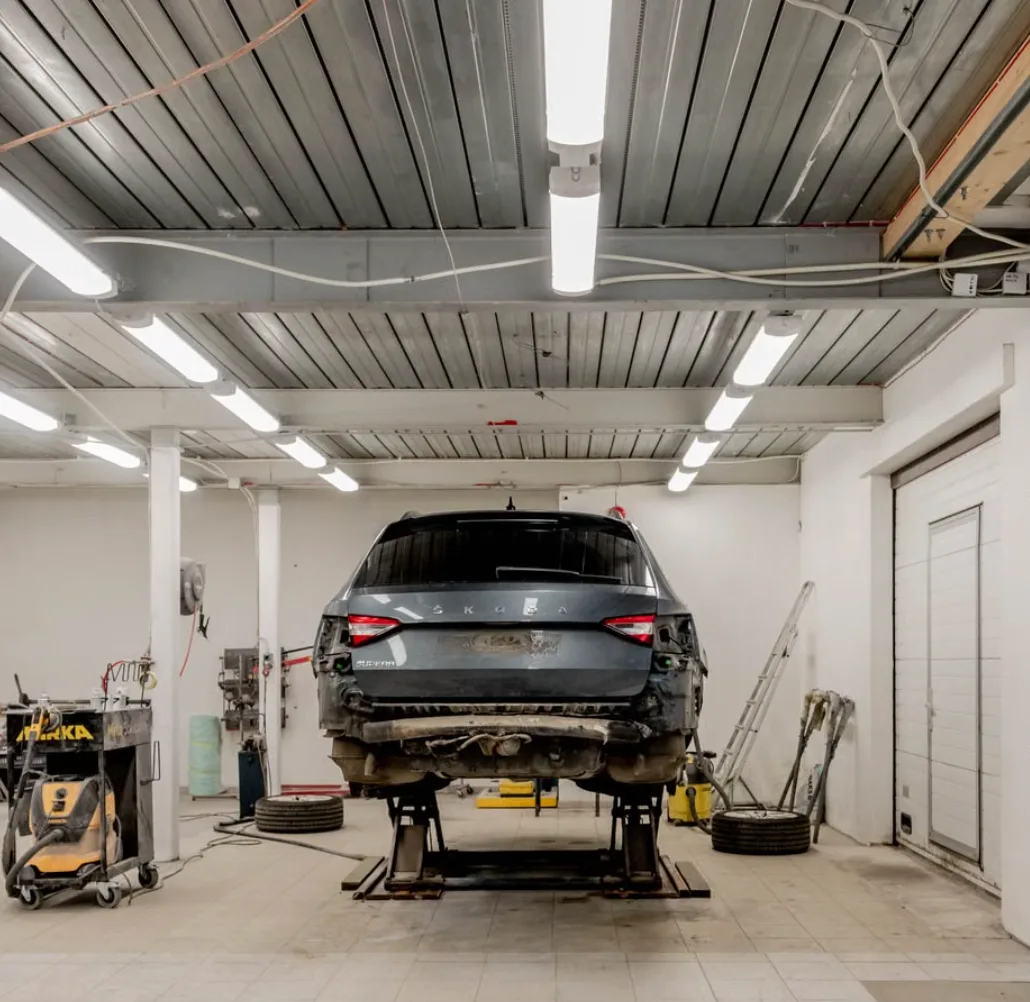
Automotive Properties Have Different Roofing Demands
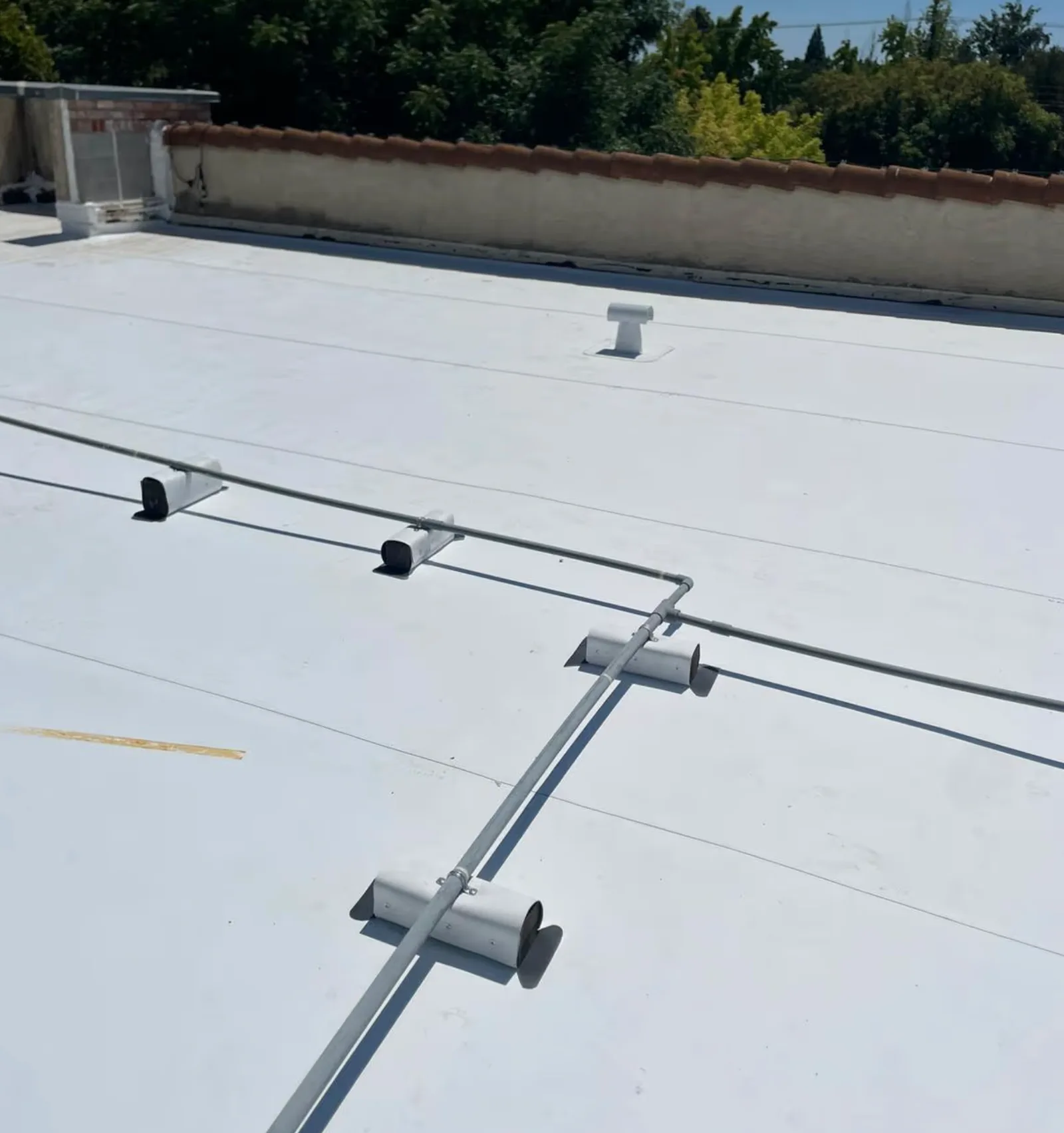
Showrooms and service bays can sit under separate roof assemblies. Leaks often develop where those sections meet, so our roofer gives that transition a close look. Our crew keeps ladders and material staging out of the service lanes. We coordinate vehicle moves with the shop before opening the roof.
Common Automotive Facility Roof Problems
Large low-slope areas can hold water near blocked drains. Equipment vibration can also weaken nearby flashing.
- Leaks at HVAC curbs
- Ponding water caused by low areas or restricted drainage
- Open membrane seams
- Deteriorated parapet flashing
- Leaks above active service bays
- Damage near building signs
- A patchwork of older repairs with no clear maintenance plan
Roof Repairs for Auto Shops and Dealerships
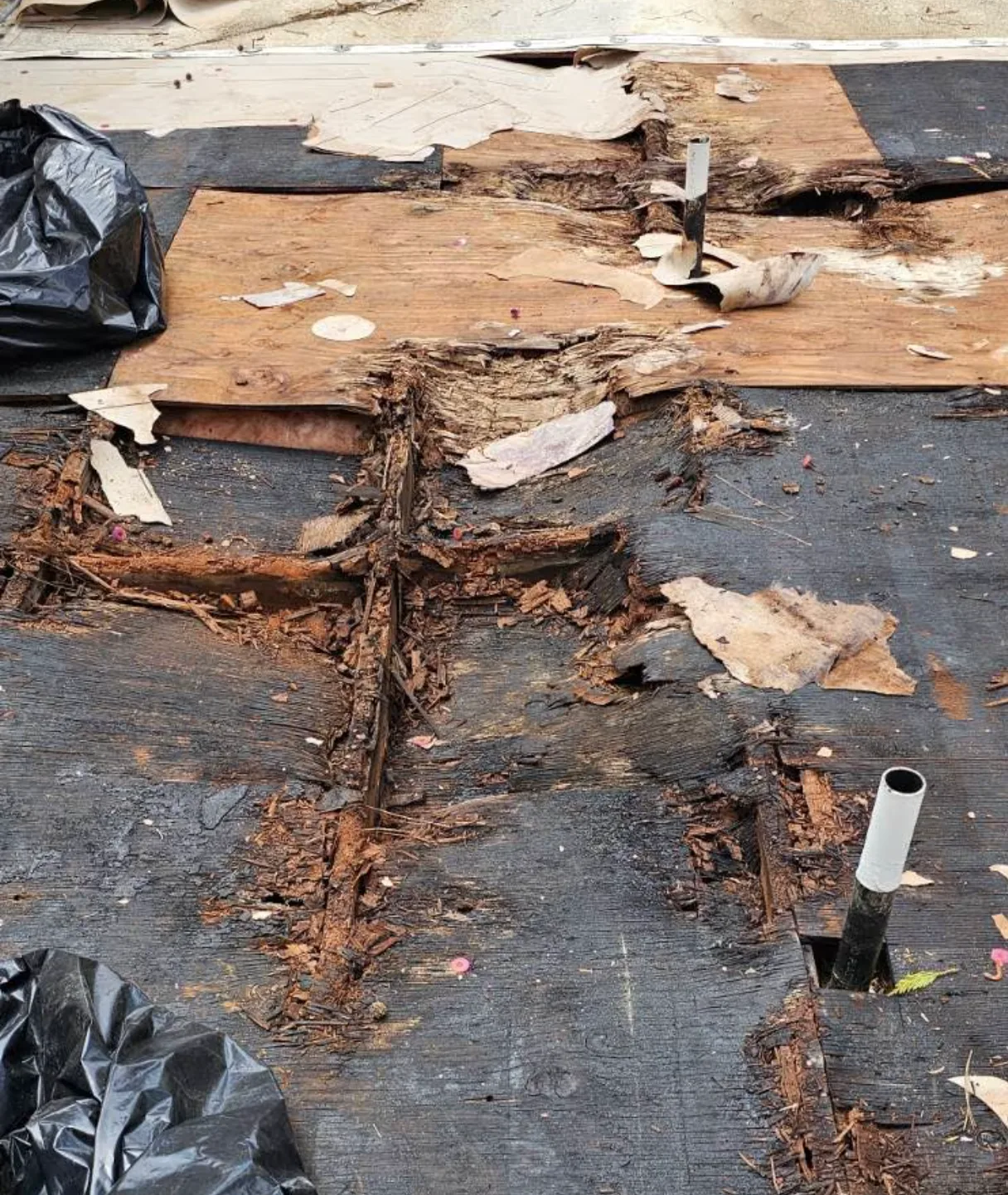
A focused repair can work when sound roofing surrounds the failure. The roofer should trace the water path and expose damaged material as needed. Vehicles below the work area may need to move. Exterior staging should keep the service drive open.
Choosing the Roof Scope
An isolated seam failure may support repair. A dry roof may qualify for a coating. Broad moisture damage can point toward replacement. The assessment should state the expected service life of each option. That gives the facility manager a useful basis for budgeting.
Coordinating Roofing With an Active Automotive Business
The facility team should mark active traffic lanes. Roofing deliveries need a separate staging area. Higher Level Roofing documents the roof condition and defines the proposed scope, and the facility contact receives clear project updates.