Local Roofing Contractor
Work with a roofing team that understands commercial properties and common low-slope roof problems.
Higher Level Roofing installs single ply roofing for flat and low-slope roofs that need dependable protection from heat, rain, ponding water, and normal roof wear. We inspect the full roofing system and explain what we find. Recommendations are based on membrane condition, drainage, flashing, seams, roof edges, and long-term performance.
California single-ply roofing costs depend on the city, county, roof access, insulation requirements, and Title 24 energy rules. Labor rates can also affect the final number. For planning purposes, these installed ranges are common on low-slope roofs.
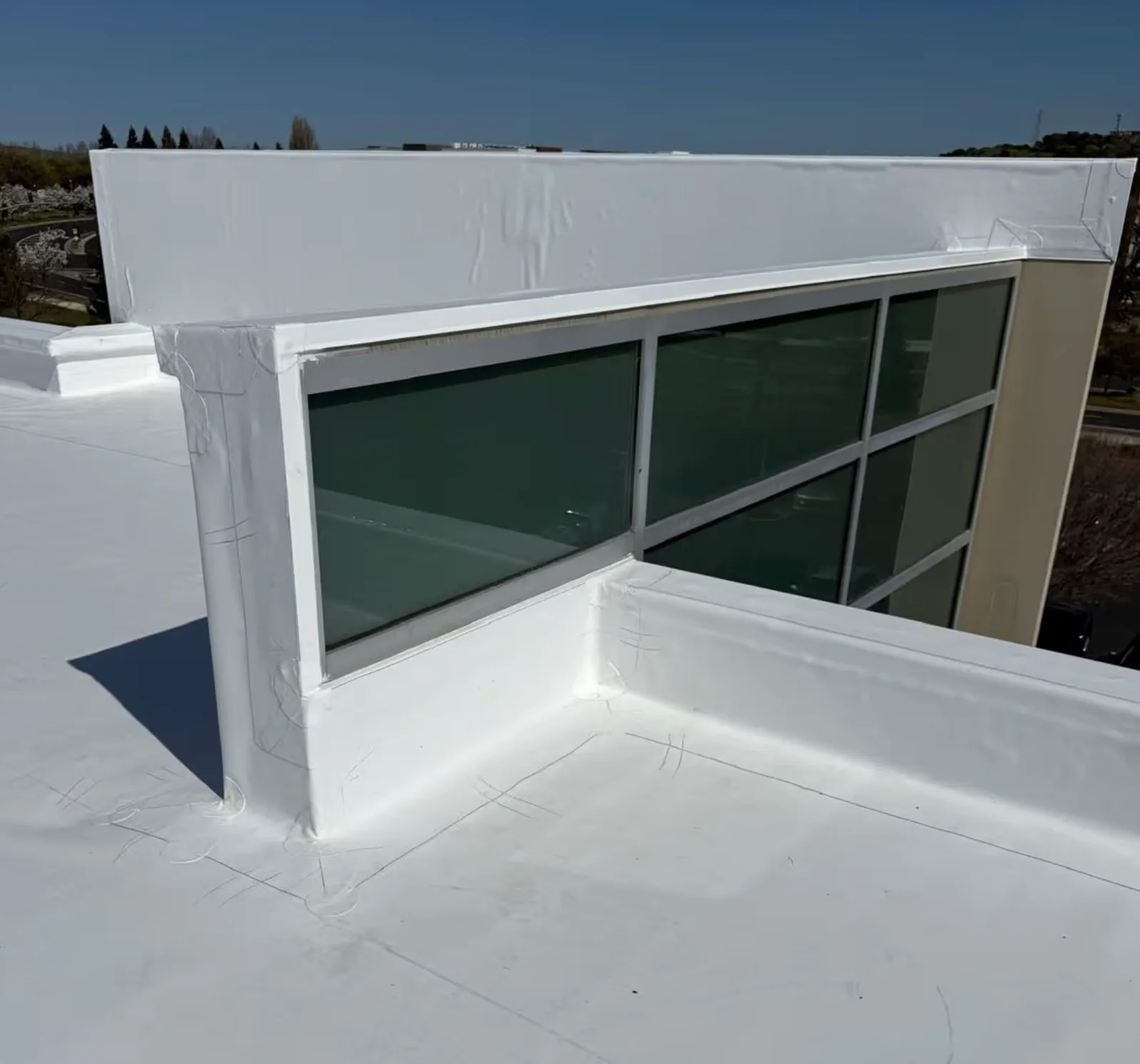
Single-ply roofing is a class of roofing material designed to be installed in one main layer. Instead of stacking multiple layers of hot tar and asphalt like traditional built-up roofing, single-ply systems use wide, flexible sheets made from synthetic rubber or plastic polymers. Those sheets are rolled out over the roof deck and insulation layer, then sealed at the seams to create a continuous watertight membrane. The goal is a flexible roof surface that can protect flat and low-slope roofs without the weight and complexity of older multi-layer systems.
A single ply roof depends on more than the membrane itself. Seams and flashing need close attention. Roof drains, scuppers, HVAC curbs, skylights, parapet walls, and edge metal also affect how well the roof performs over time. Higher Level Roofing takes a contractor-first approach. We look at the roof surface, substrate, drainage pattern, past repair areas, and visible signs of moisture before recommending repair, replacement, or a new single ply roofing system.
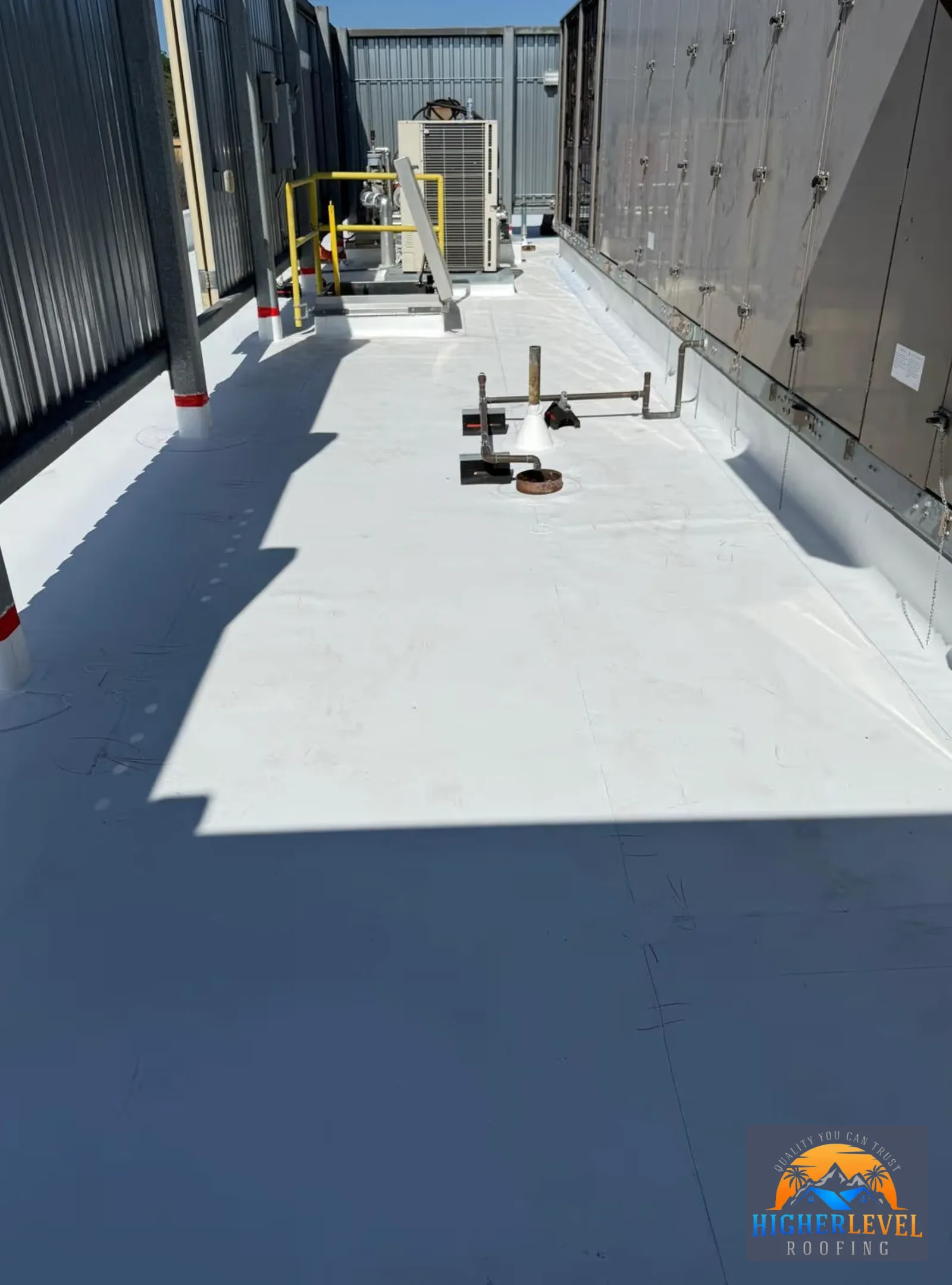
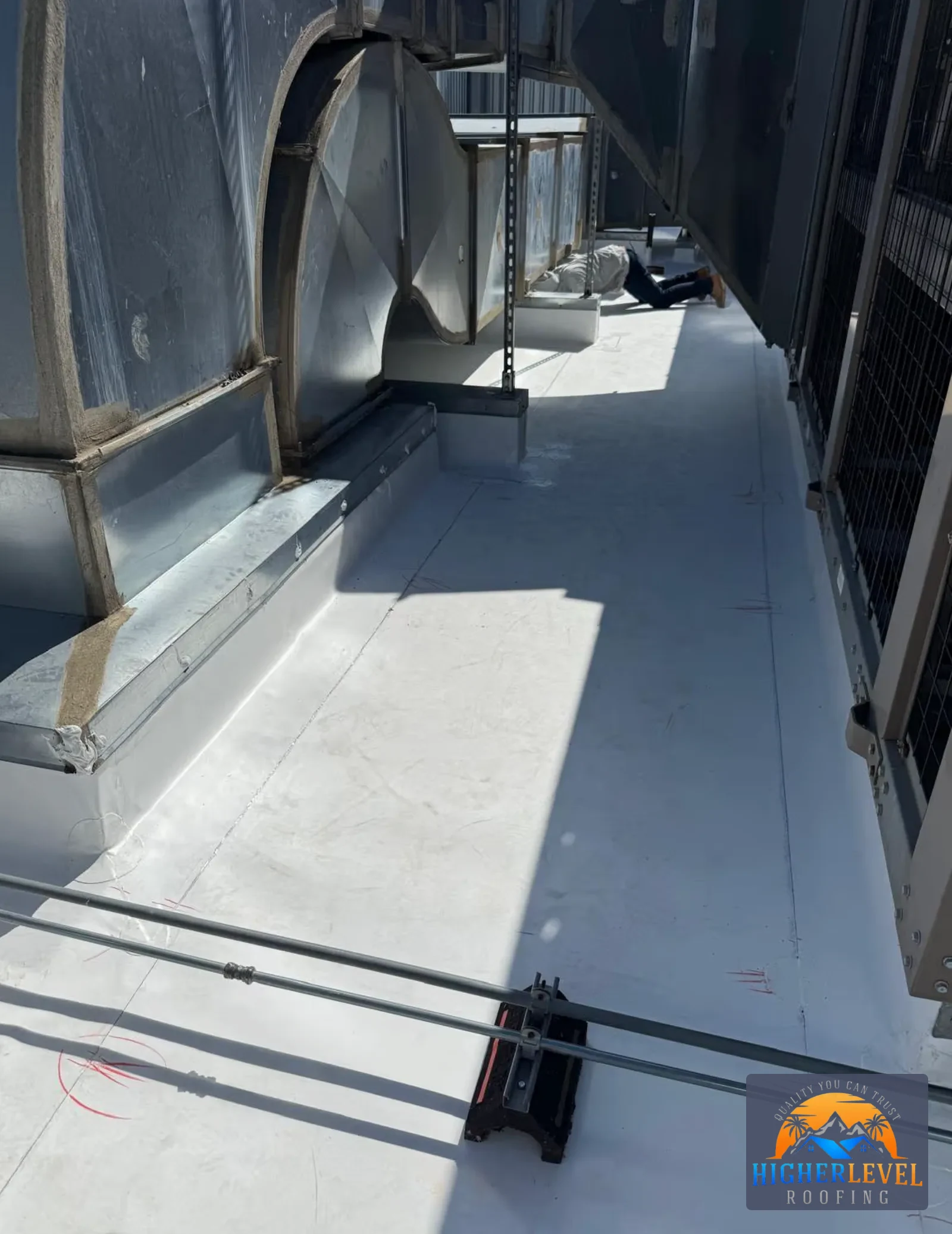
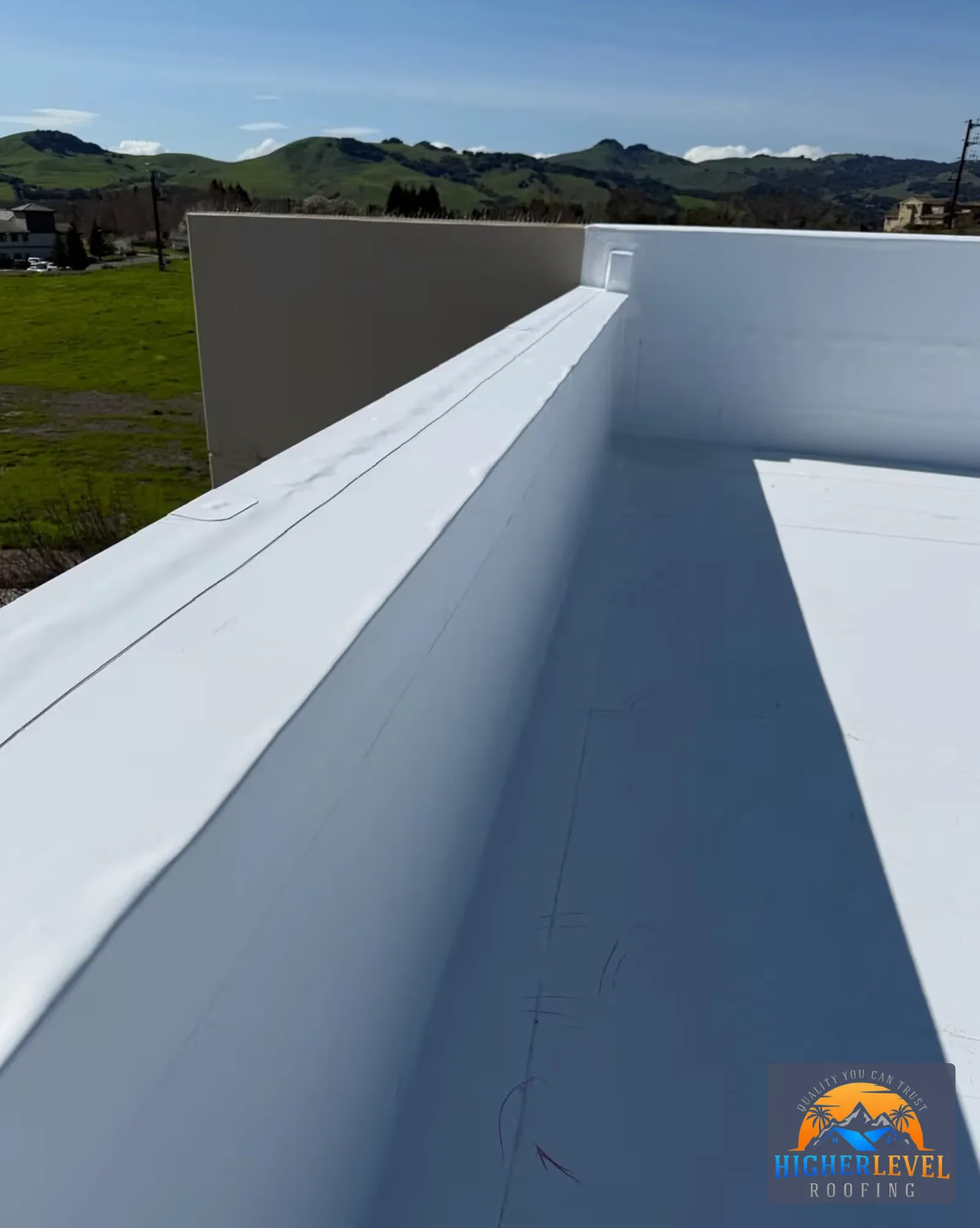
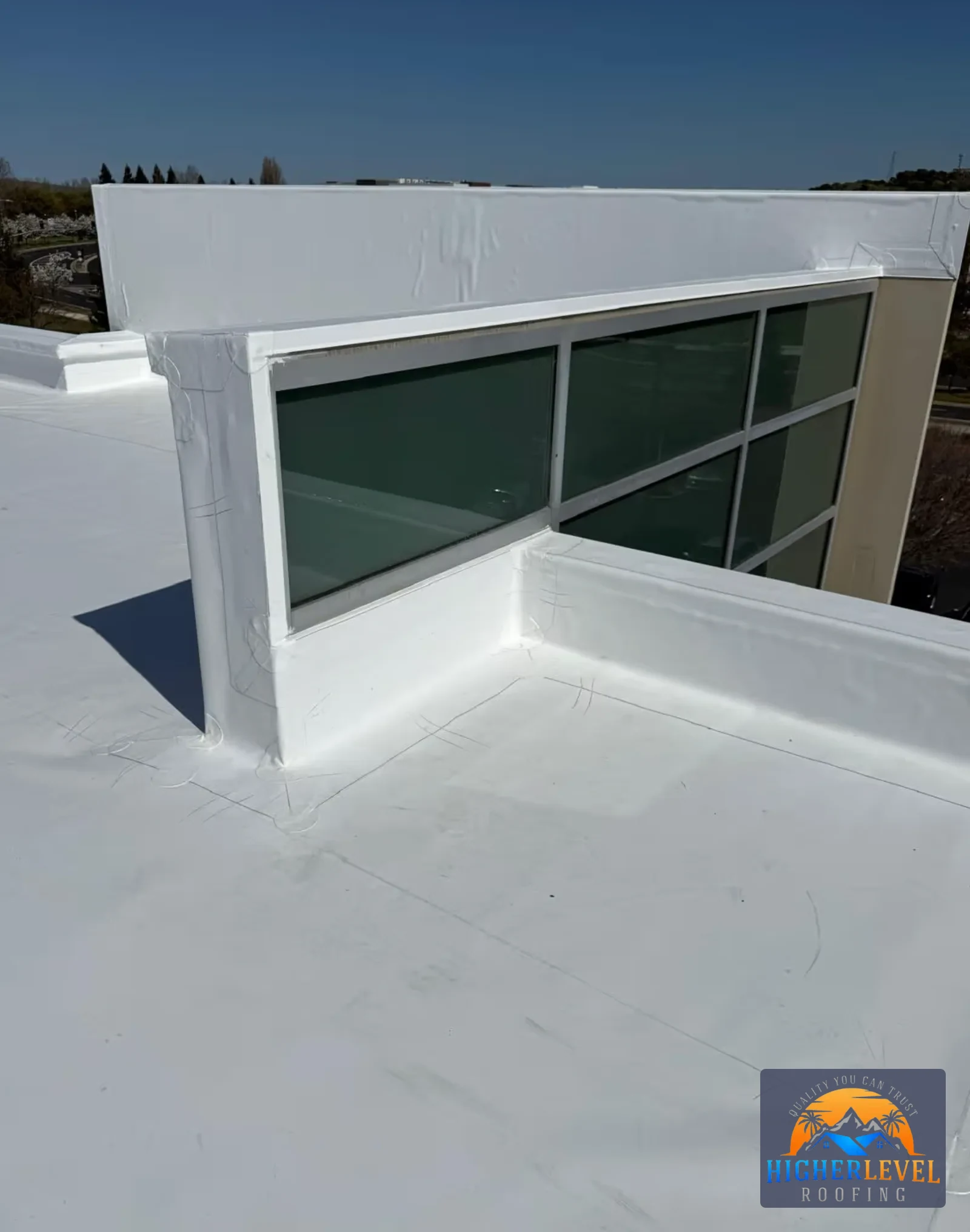
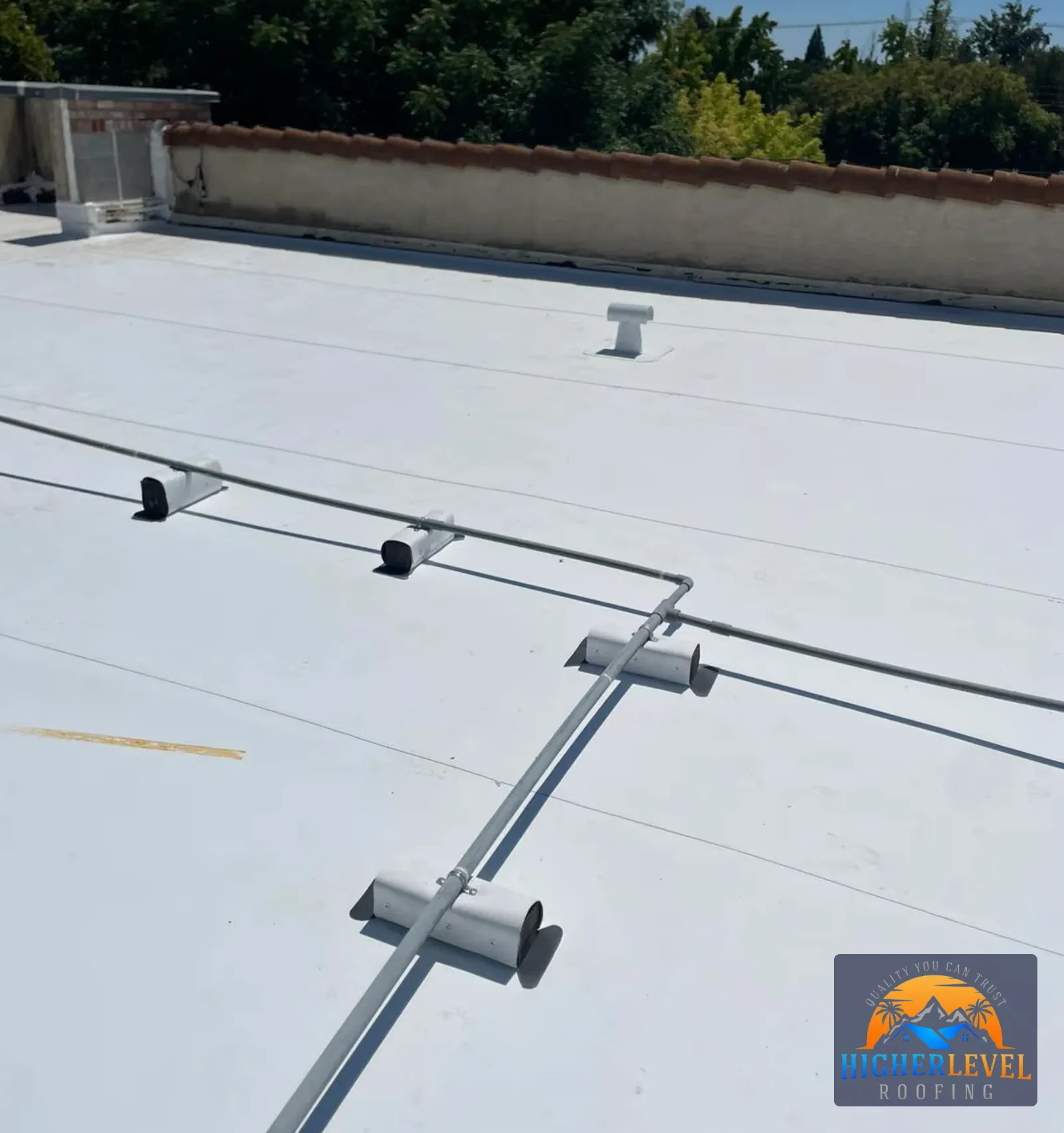
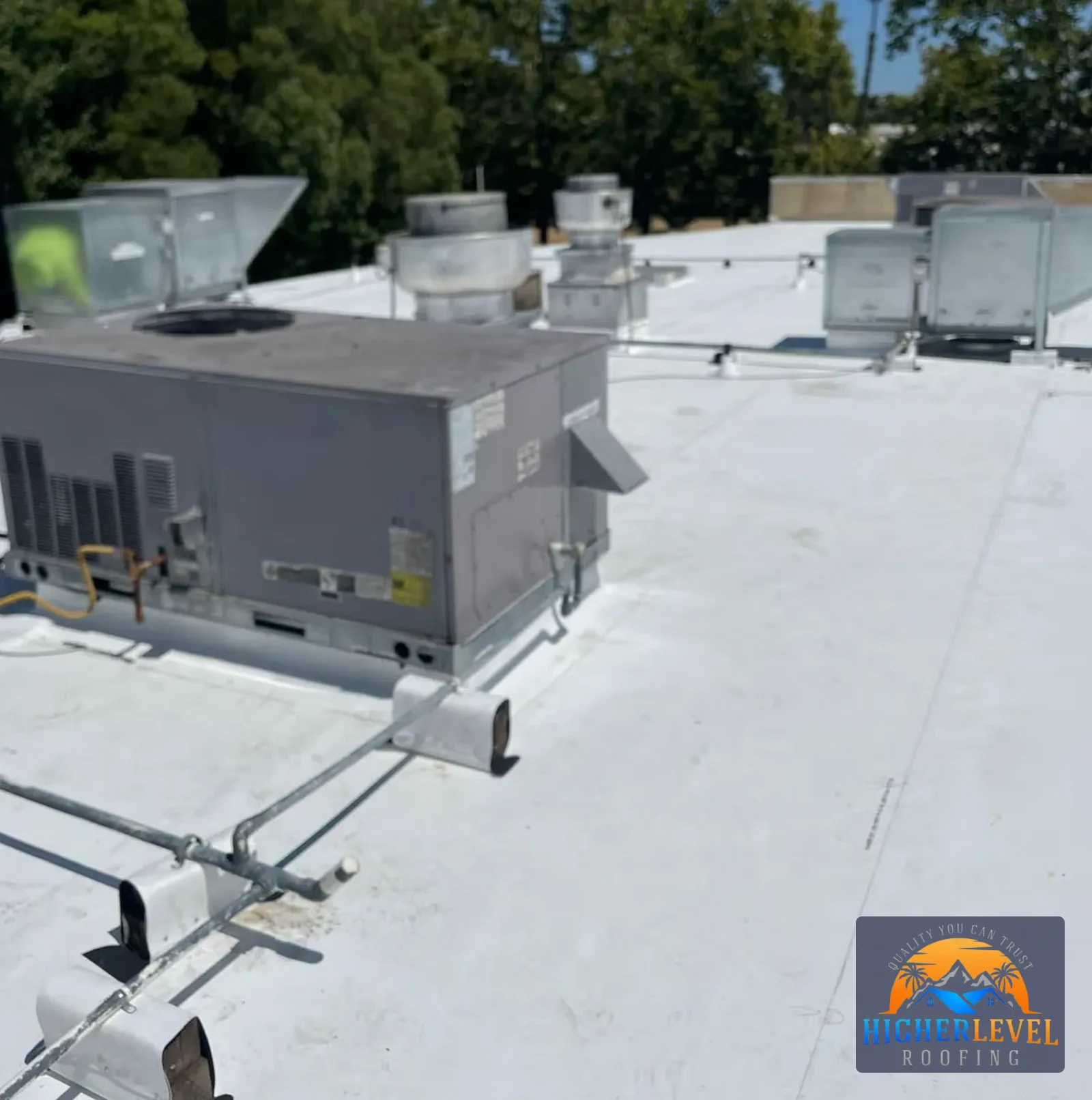
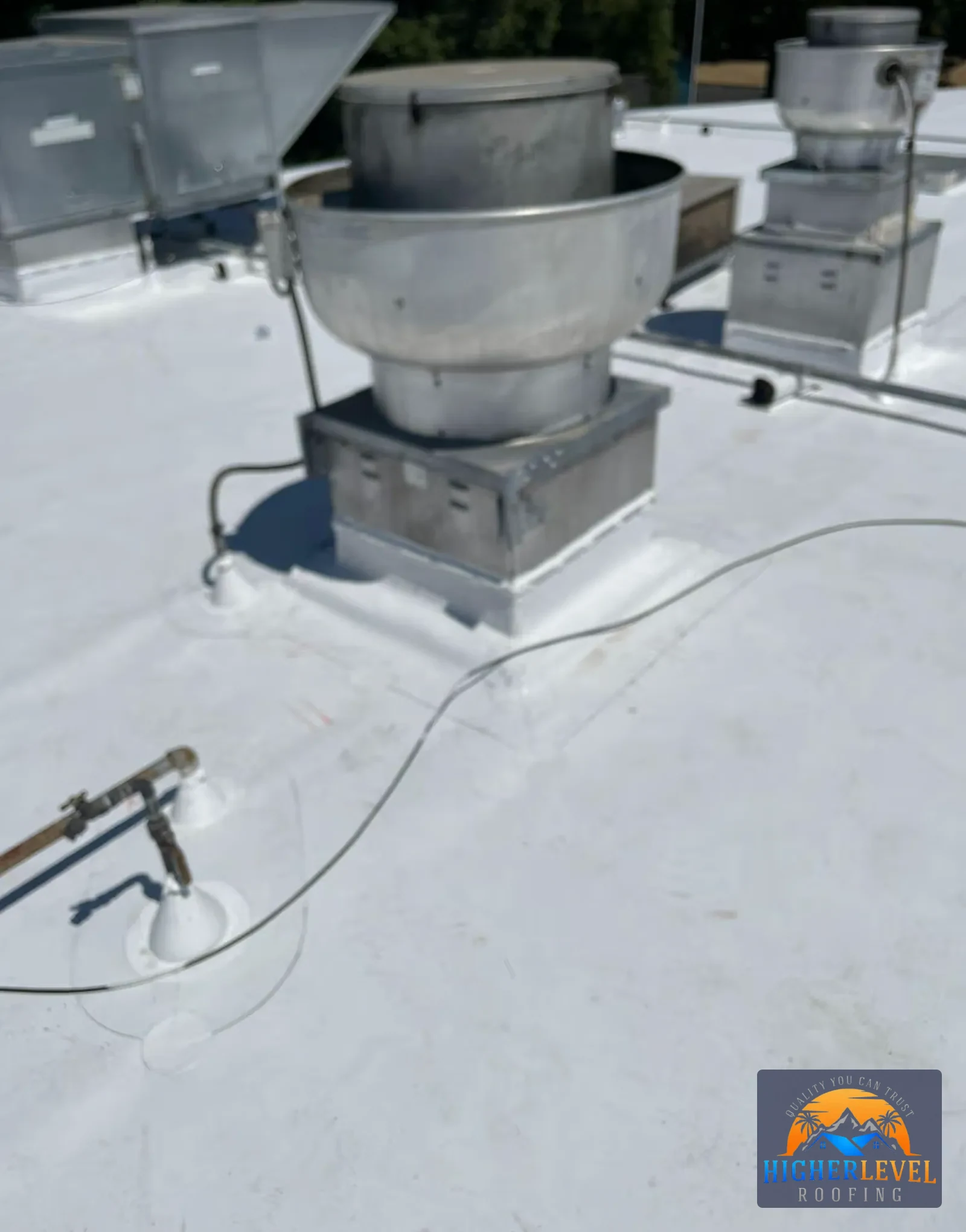
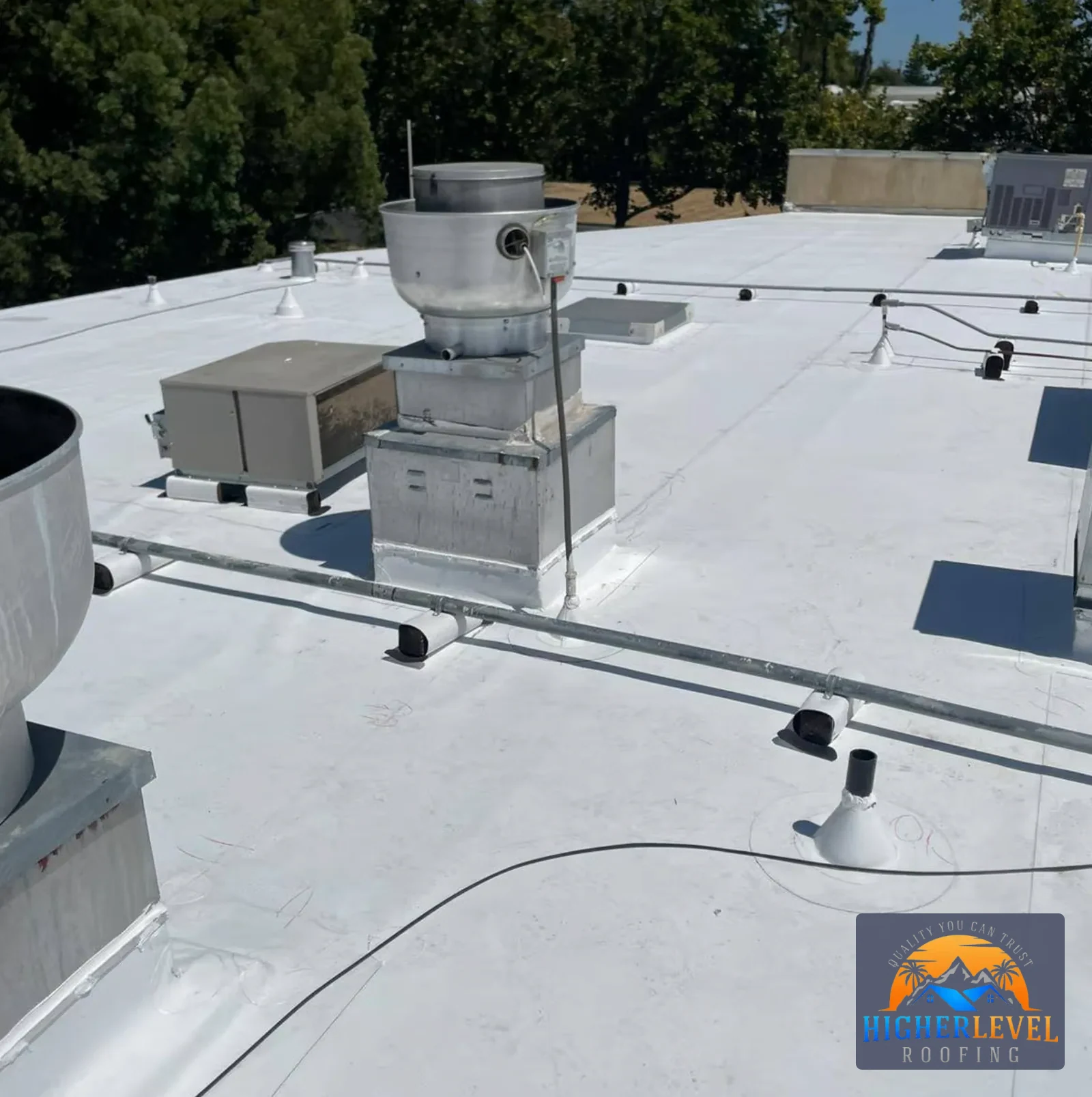
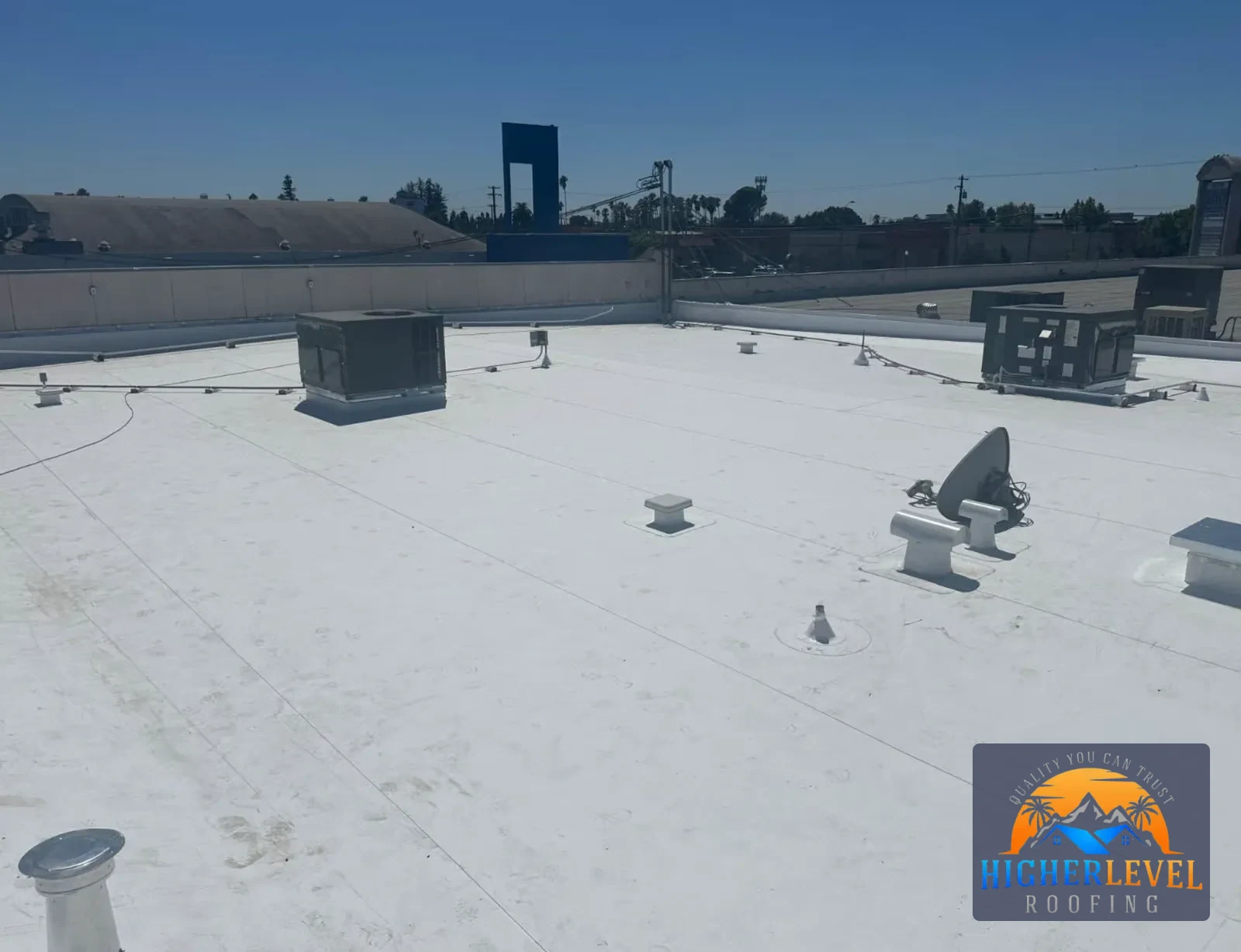
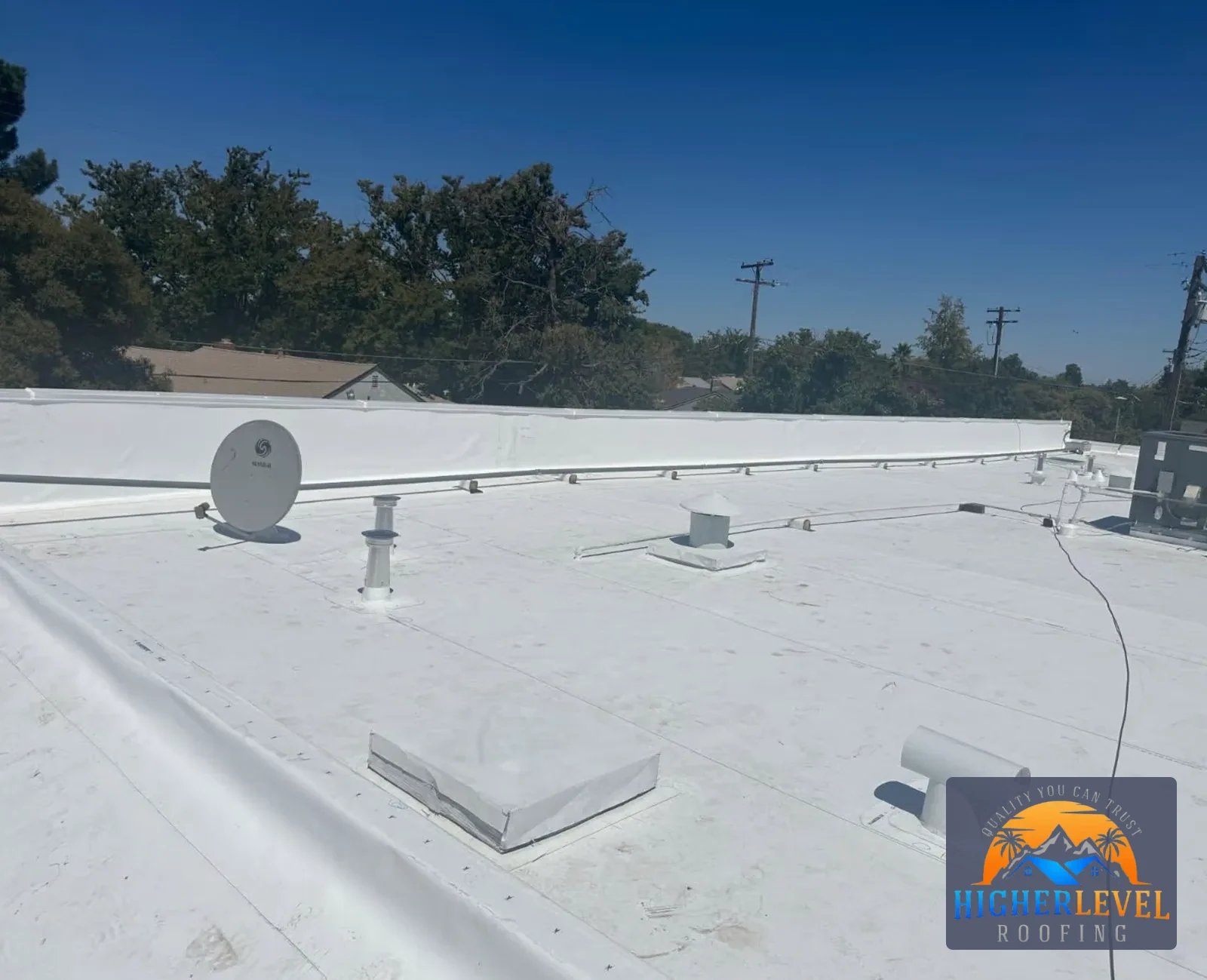
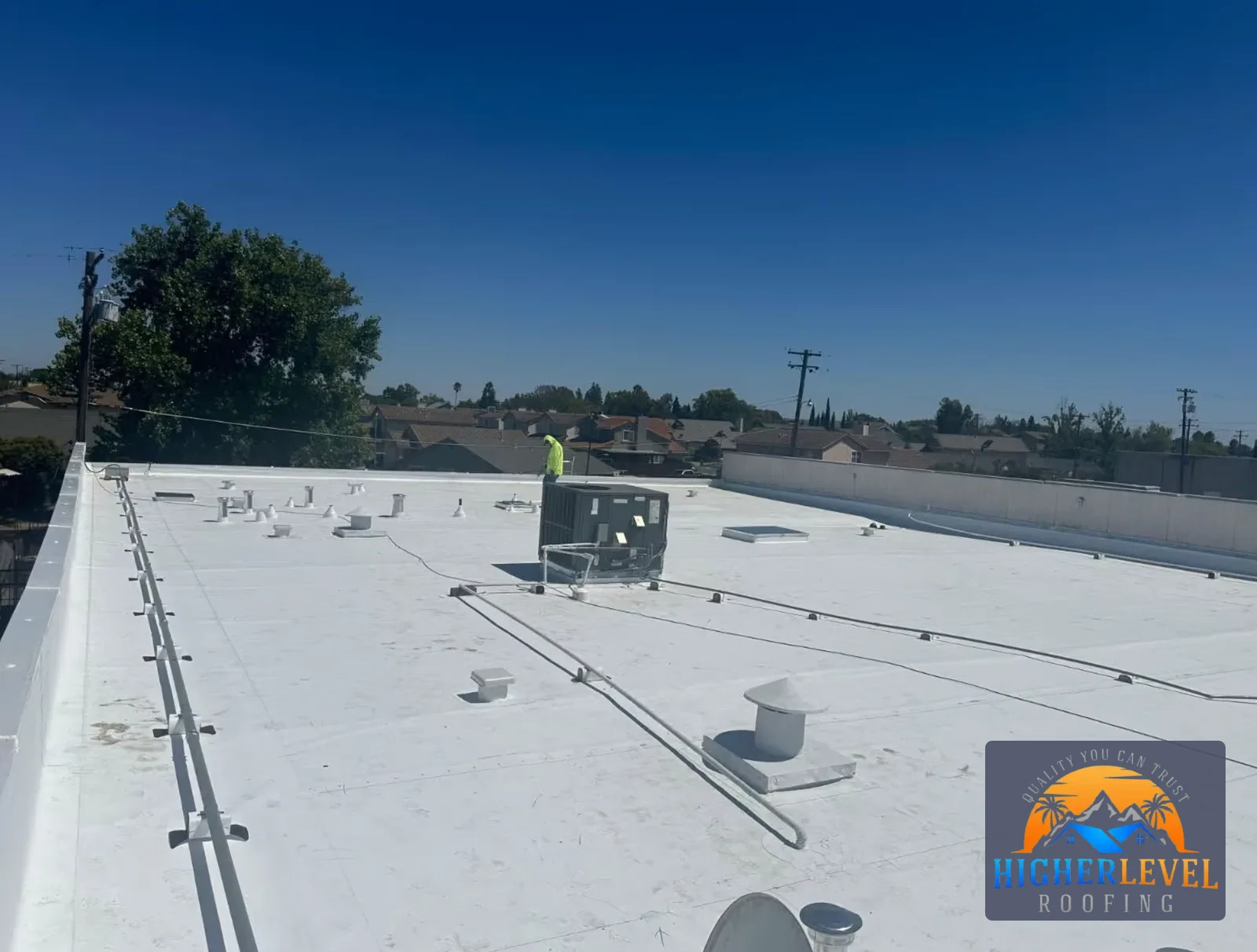
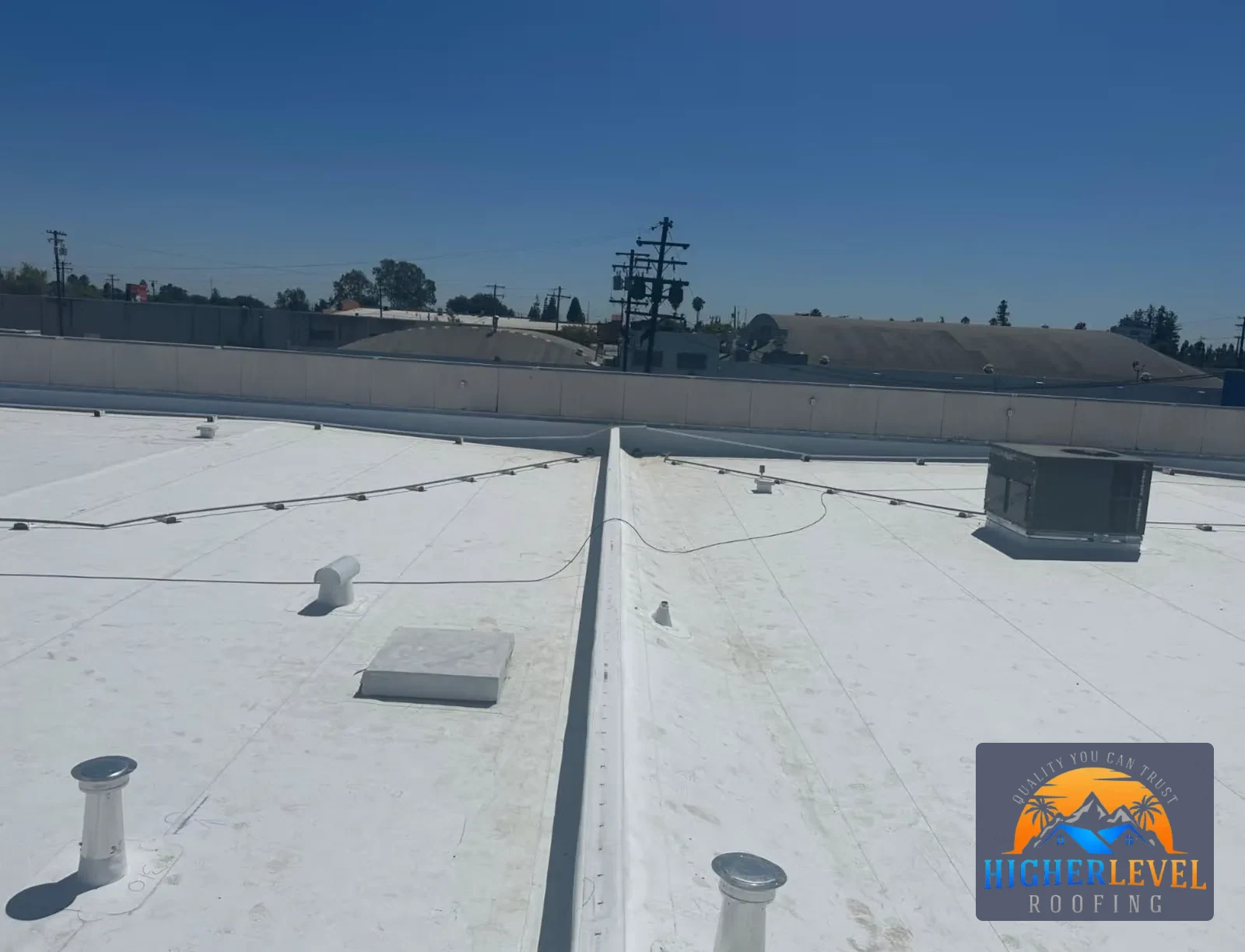
Single-ply roofing is engineered for flat and low-slope roofs. Water does not run off those surfaces as quickly as it does on a pitched roof, so the roof needs a sealed membrane instead of overlapping shingles. That is why single-ply systems are common on commercial buildings, industrial buildings, flat roof additions, and modern low-slope homes. In hot climates, white-faced single-ply membranes can support cool roof goals. They reflect sun exposure and reduce heat gain inside the building.
The three common single-ply roofing materials are TPO, PVC, and EPDM. TPO, short for thermoplastic polyolefin, is one of the most common commercial roofing membranes. It is cost-effective, reflective, and installed with heat-welded seams. PVC, short for polyvinyl chloride, is a flexible plastic membrane. It is often used where grease, chemicals, or kitchen exhaust may reach the roof. PVC usually costs more than TPO, but it can be a better fit for restaurants and certain commercial buildings. EPDM, short for ethylene propylene diene monomer, is a synthetic rubber membrane. It is durable in harsh weather and can handle hail well. Its seams are usually glued or taped instead of heat-welded.
Single-ply roofing can be a strong fit for flat and low-slope buildings, but the roof has to be installed correctly.
Single-ply systems are often faster and less expensive to install than metal panels or heavy built-up roofing.
The membrane adds limited structural load, which can help on older buildings or wide-span commercial roofs.
White TPO and PVC membranes reflect sun exposure and can help reduce cooling demand in hot weather.
Properly welded seams create a continuous barrier against water.
PVC can be a good fit where grease or chemical exposure reaches the roof.
A single membrane layer can be damaged by dropped tools, heavy foot traffic, or storm debris.
The roof depends heavily on proper seam work. Poor welding or adhesive failure can lead to leaks.
The membrane itself does not insulate the building. Rigid insulation boards are installed below it when thermal performance is needed.
Standing water can shorten roof life when drainage is poor.
Single-ply roofing is one of the faster commercial roof systems to install. It avoids open-flame torch work and hot asphalt kettles. Most single-ply systems are installed in one of three ways.
For TPO and PVC, we use an electric hot-air welder to fuse overlapping seams together. That seam work is a major part of the roof's waterproofing, so installation quality matters as much as the membrane selected.
Single ply roofing has to handle California heat, UV exposure, seasonal rain, and wind. Low-slope roofs are especially sensitive to standing water. Local awareness matters because roofing recommendations should match the building location and climate. A roof that sees long sun exposure in the Sacramento area may need a different approach than a shaded roof with drainage problems. A roof with older patches may need another approach than a roof with one isolated puncture. We take those conditions into account before recommending the next step.
Higher Level Roofing installs single ply roofs. Depending on the roof, single ply installation may include TPO, PVC, EPDM, or another membrane option. The best material is chosen based on the roof layout, building use, slope, drainage, exposure, existing roof condition, and budget. Properly completed installation means more than covering the roof with membrane. It means dry interior space and increased value for your commercial property.
When we provide a free estimate for single ply roofing, it helps the property owner understand the condition of the roof. We look at the roof surface, seams, flashing, penetrations, drainage points, and previous repair areas before discussing the project scope. Some roofs only need a targeted repair. Other roofs need replacement. We explain the difference so you can make a practical decision for your property. If your flat or low-slope roof is leaking, holding water, showing open seams, or developing repeated problem areas, it is better to have it checked before the damage spreads into insulation, decking, drywall, or interior finishes. In some cases, roofing coatings may also be part of the conversation. Schedule a single ply roofing estimate with Higher Level Roofing. We will inspect the roof, explain your options, and help you choose the right next step for your home or property.
Yes. Higher Level Roofing provides single ply roofing service and nearby Sacramento-area communities.
Single ply roofing is commonly used on flat and low-slope roofs. It may be suitable for homes, garages, additions, multifamily properties, and commercial buildings depending on the roof design.
Common single ply roofing materials include TPO, PVC, and EPDM. The right option depends on the roof condition, slope, drainage, exposure, building use, and project goals.
Repair may be enough for isolated punctures, small seam issues, or limited flashing problems. Replacement may be the better option when the membrane is aged, brittle, repeatedly patched, holding water, or failing across several areas.
We check the membrane surface, seams, flashing, roof edges, drainage areas, scuppers, drains, penetrations, soft spots, previous patches, and visible signs of moisture or leak activity.
Yes. We inspect the roof, explain the condition, and review the recommended scope before the roofing project is scheduled.
Yes. We protect the property during the project and clean the work area when the roofing work is complete.
Great owner and great business
Cody and the crew were awesome to work with! They showed up for an estimate within 24 hours and...
I hired them for a thorough inspection after the last roofing company I used caused a leak and...
Five stars for Higher Level Roofing! Cody and the team at Higher Level Roofing truly live up to...
The best roofing contractor in Sacramento! We have worked with a few roofing companies over the...
Great guys! We love Cody. We have used them a few times, and their work is great. They leave the...
Home Roofing Services
Request help with roof repairs, replacement, tile roofing, flat roofing, gutters, coatings, or a roof inspection. We will review the details and follow up with practical next steps.
Privacy choices
We and other third parties use cookies and other tracking technologies to help personalize content, to analyze and measure advertisements, to improve and protect our site, to provide chat, hosting and other services, and as further described in our Privacy Policy. By browsing our website, you consent to this use.