Roofing Contractor Knowledge
Solar belongs on a roof, so a roofing contractor is the right choice for installation.
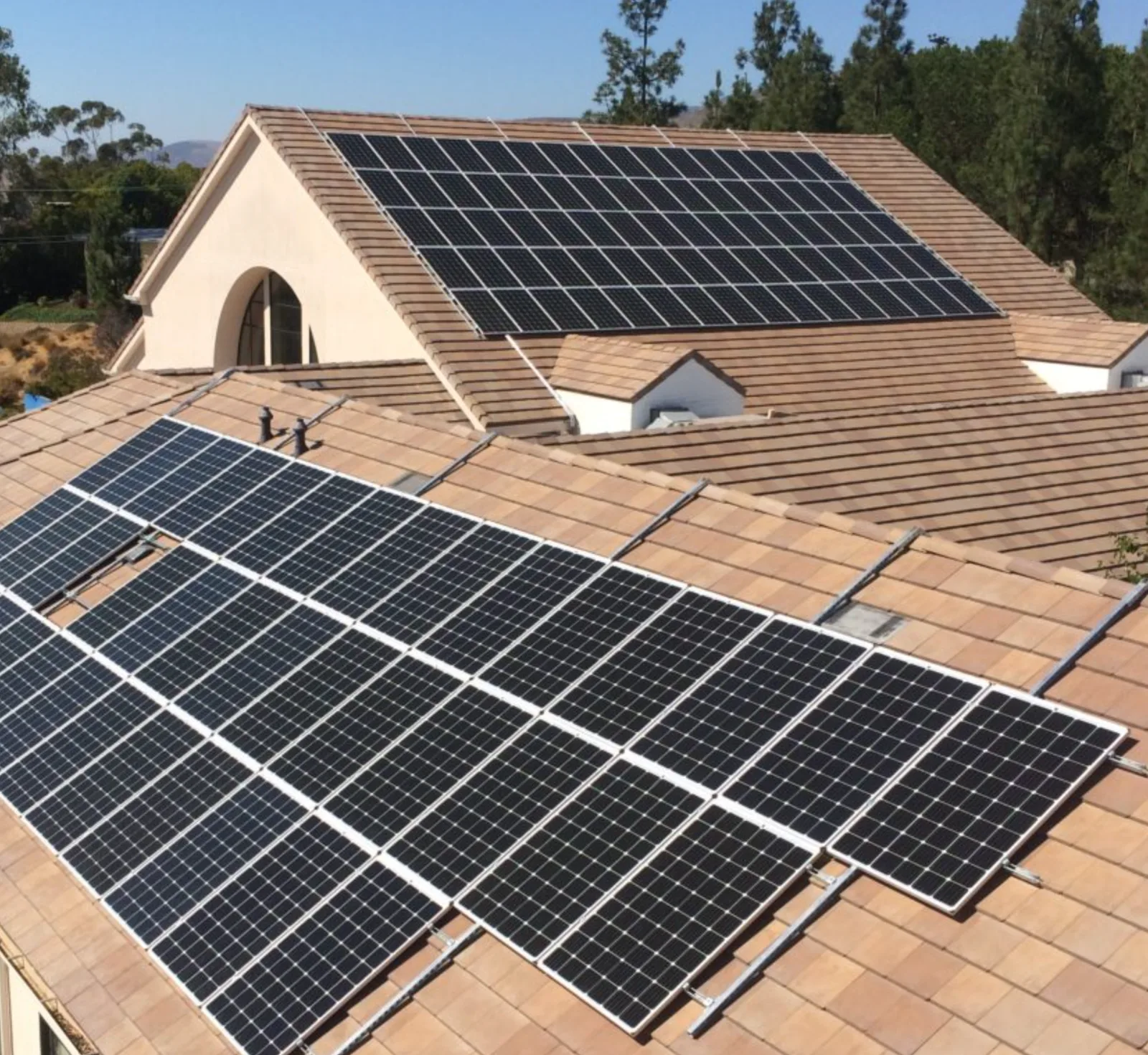
We provide roof-mounted solar installation for property owners in Granite Bay, CA. The Higher Level Roofing crew plans the whole solar project from start to finish. The owner knows what is happening at every step of the way. The finished roof solar installation work looks aesthetically pleasing and reduces energy costs.
A typical 2,000-square-foot home in Granite Bay, CA may need a solar system between 7 kW and 10 kW to offset most of its energy use. Actual sizing depends on electrical use, roof layout, shade, utility rates, and whether the home has an EV or battery storage. As a planning range, Granite Bay, CA solar pricing often falls around $2.40 to $3.50 per watt before incentives. The chart below shows common 7 kW to 10 kW system ranges and the estimated net cost after a 30% federal tax credit.
Granite Bay homeowners are often in PG&E territory, which means NEM 3.0 rules can affect the solar payback. Under these rules, the utility credit for excess daytime solar sent back to the grid is much lower than it was under older net metering programs. This changes how the project is planned. A battery can store daytime power so the home can use more of its own electricity during higher-cost evening utility periods. For many Granite Bay homes, battery storage is now part of the install.
A standard home battery can add about $9,000 to $18,000 to the gross project cost. The 30% federal tax credit may apply to battery storage when the project qualifies.
A simple one-story asphalt shingle roof is usually easier to install on. Steep roofs, tile roofs, and multi-story homes can require more labor and specialized mounting hardware.
Premium panels and advanced microinverters can raise the upfront cost, but they may offer stronger warranties and lower production loss over time.
Older homes may need a main electrical panel upgrade before solar can be connected safely. That work can add about $2,000 to $4,000 to the project.
*Disclaimer - These numbers are planning ranges. Higher Level Roofing still needs to review roof condition, panel layout, attachment points, electrical needs, and any roof work that should happen before installation.
Why choose us?
Solar installation providers pay attention to solar panel placement on the roof. Mounts and panel layout matter because poor placement can make future roof replacement or service harder. Our team plans these details ahead of the solar installation project and keeps the homeowner informed as the project advances. The finished installation looks great and, most importantly, functions properly.
Roof-mounted solar can help a home produce its own electricity and reduce reliance on the utility company. A lot of factors affect the setup, with access to sun being a major one. After all that is where the energy comes from. The roof is reviewed to make sure it can support the installation.
Solar panels can reduce how much electricity the home pulls from the utility company. That can help the owner control energy costs over time.
When paired with a battery, solar can provide backup power during grid outages, rolling blackouts, or severe weather events.
Homes with owned solar systems can be more attractive to buyers because the system may reduce future energy costs.
Solar power can reduce household reliance on fossil-fuel generated electricity and lower the home’s carbon footprint.
Granite Bay, CA Title 24 Energy Efficiency Standards require solar photovoltaic systems on many newly built homes. The rule is part of the state’s push toward cleaner electricity and better building efficiency. New construction is usually the easiest time to plan solar because roof layout, electrical pathways, panel placement, and code requirements can be handled before the home is finished. The requirement also helps reduce pressure on the power grid during hot weather. Rooftop solar spreads generation across many homes instead of relying only on large central power sources. For new construction, the minimum system size is calculated through Granite Bay, CA’s standard design approach, which considers the home, climate zone, and energy model.
kWPV = (CFA x A) / 1000 + (NDwell x B)
CFA is the conditioned floor area. NDwell is the number of dwelling units. A and B are adjustment factors based on the local climate zone.
Solar can be a strong long-term upgrade, but the roof and ownership structure need to make sense before panels are installed.
Solar can reduce monthly utility bills by producing electricity on the roof.
Generating power at home can help reduce exposure to unpredictable energy costs.
Federal solar tax credits may reduce the net project cost when the system qualifies.
Solar panels are built for long service life, often 25 years or more.
Solar can require a larger initial investment, though financing and loan options may be available.
The roof needs good structural condition, usable sunlight, and proper attachment areas.
Some homeowners do not like how panels look on the roof.
Leased panels can create extra steps if the homeowner decides to sell or move.
Granite Bay, CA solar rules changed under NEM 3.0 in April 2023. The credit homeowners receive for sending excess solar power back to the grid is much lower than it was under prior net metering rules. Because of that, many Granite Bay homeowners now review battery storage with the solar installation plan so they can store their own power and use it during higher-cost afternoon utility periods. When possible, buying the solar system with cash or a standard loan is usually cleaner than signing a lease or power purchase agreement. Leases and PPAs can complicate a future home sale and may reduce the long-term financial benefit compared with owning the system.
Solar systems are usually low maintenance, but a small amount of routine attention can help the system keep producing power and protect the roof area below the panels.
Review the smartphone app or monitoring portal to confirm the system is communicating with Wi-Fi and actively producing power.
Use a standard garden hose to remove dust, pollen, and bird droppings. Avoid harsh chemicals, soaps, and high-pressure washers.
Look from the ground for leaves, branches, or debris collecting under the panels. Debris can create fire risk or damage wiring.
Have a solar technician inspect the inverter, mounting hardware, and electrical connections. Inverters often need replacement around the 10-to-15-year mark.
Higher Level Roofing can provide a Granite Bay, CA homeowner a free estimate for a solar installation project. We review the roof surface and available panel area and you get a practical explanation of what we see and what the project will likely require. We want homeowners to feel informed and never pressured. When you are ready to talk through your solar project get in touch to schedule an onsite review. You can expect a direct conversation about all relevant project details, including gutter drainage near roof edges. We keep the process simple and focused on your needs.
Yes. Higher Level Roofing provides roof-mounted solar installation and nearby Granite Bay, CA communities.
Yes. The roof should be reviewed before solar panels are installed because every mount depends on solid roof material, proper flashing, and a surface that can support the system.
A typical 2,000-square-foot home in Granite Bay, CA may need a 7 kW to 10 kW system. Based on the page's planning range, gross cost may land around $17,500 to $35,000 before incentives.
The 30% federal tax credit may apply to battery storage when the project qualifies. Homeowners should confirm eligibility with a tax professional before counting the credit in the budget.
Under NEM 3.0, the credit for sending excess daytime solar power back to the grid is much lower than older net metering programs. A battery can store daytime solar power so the home can use more of its own energy during higher-cost evening periods.
Granite Bay, CA Title 24 Energy Efficiency Standards require solar photovoltaic systems on many newly built homes. The required system size is based on the home's design, floor area, climate zone, and energy model.
Homeowners should check the monitoring app monthly, rinse panels gently when needed, look for debris from the ground, and have a professional inspect the inverter, mounting hardware, and electrical connections every few years.
Great owner and great business
Cody and the crew were awesome to work with! They showed up for an estimate within 24 hours and...
I hired them for a thorough inspection after the last roofing company I used caused a leak and...
Five stars for Higher Level Roofing! Cody and the team at Higher Level Roofing truly live up to...
The best roofing contractor in Sacramento! We have worked with a few roofing companies over the...
Great guys! We love Cody. We have used them a few times, and their work is great. They leave the...
Home Roofing Services
Request help with roof repairs, replacement, tile roofing, flat roofing, gutters, coatings, or a roof inspection. We will review the details and follow up with practical next steps.
Privacy choices
We and other third parties use cookies and other tracking technologies to help personalize content, to analyze and measure advertisements, to improve and protect our site, to provide chat, hosting and other services, and as further described in our Privacy Policy. By browsing our website, you consent to this use.