Roofing Coating Specialists
We bring attention to every roofing coatings project because the details determine how long the protection lasts.
A roof coating is a fluid-applied membrane that is rolled or sprayed directly onto an existing roof. It goes on looking a bit like thick paint, then cures into a tough, continuous, seamless layer. It's designed to extend roof life instead of moving straight to a full tear-off and replacement. Higher Level Roofing works with most roof coating systems used in Orangevale, CA. We can help the property owner make the best decision possible. Crews keep the job site clean and tidy while the coating is being applied. The results speak for themselves.
Roof coating pricing in Orangevale, CA depends on the type of coating chosen for the roof. A fully installed roof coating often falls between $2.50 and $12.00 per square foot. A standard residential roof around 1,500 to 2,000 square feet may land between $3,500 and $10,000 depending on the coating material and the condition of the existing roof.
Acrylic coatings usually keep the project closer to the lower end. Silicone, polyurethane, and specialized spray-foam roof systems can push the cost higher. The roof still needs an inspection because preparation often decides whether a coating will bond and perform correctly.
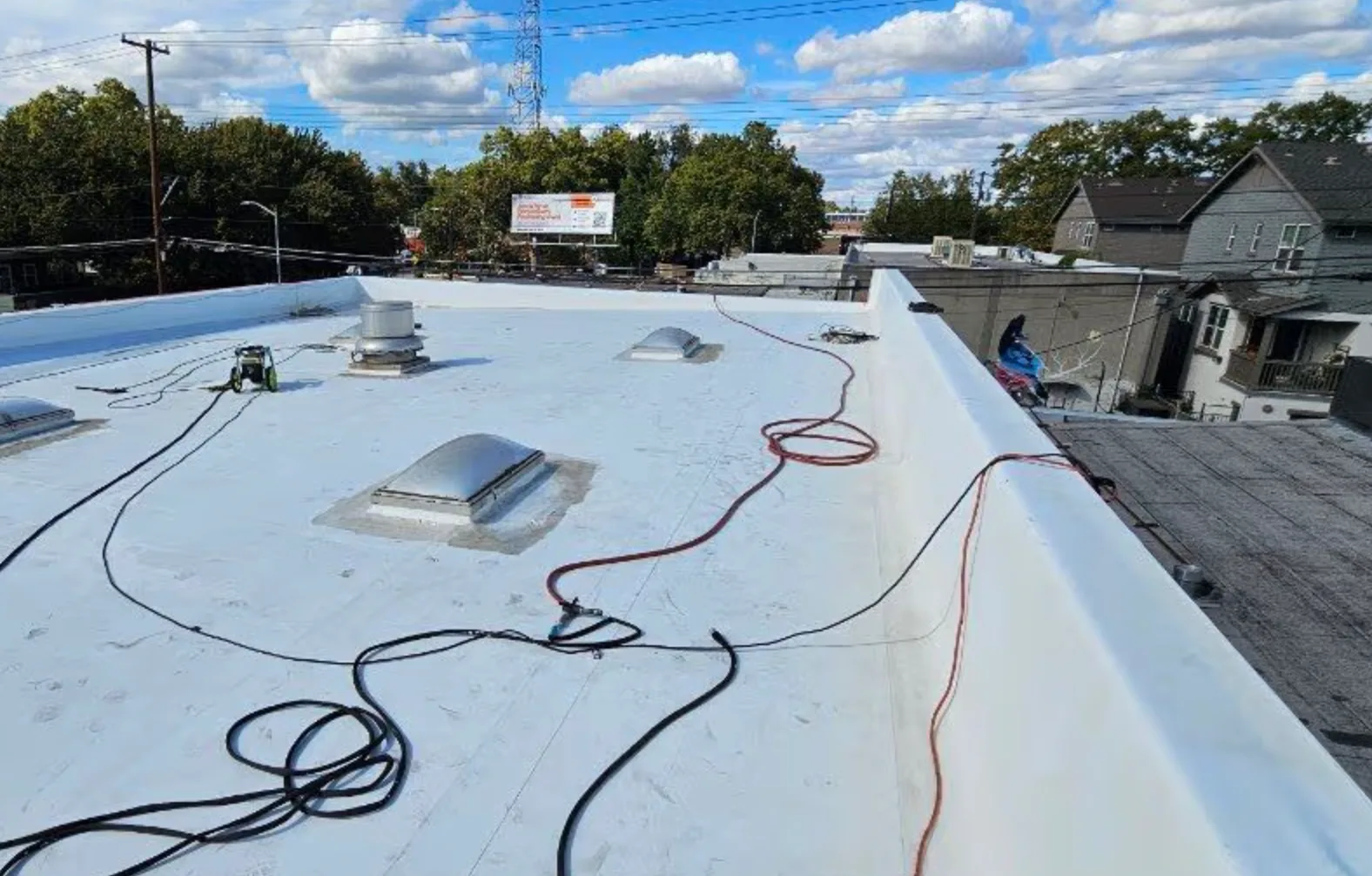
Higher Level Roofing is experienced with applying different roof coating systems on commercial buildings in Orangevale, CA. We identify the roof areas that need attention before coating goes down. Property owners notice the difference when the crew pays attention to these steps and the finished surface shows the difference.
We treat roofing coatings as a practical way to add years of useful life to an existing roof. Many roofs reach a point where a full roof replacement costs more than the remaining value the structure can deliver. The inspection comes first so we can point out the actual condition of the membrane and flashings. We walk through the options and explain what each coating type does best on that particular roof deck. Property owners get recommendations based on the slope and the age of the roof. We also consider the weather it faces each season when planning the coating work.
Different roof coatings solve different roof problems. The right coating product depends on roof slope, ponding water, foot traffic, UV exposure, and the material already on the roof.
Acrylic is water-based and highly reflective. It can work well on sloped roofs, metal roofs, and some asphalt surfaces, but it can break down when water sits on it.
Silicone is highly elastic and UV resistant. It is often used on flat roofs because it can handle ponding water better than many other coatings.
Polyurethane is one of the tougher coating options. It can hold up better under foot traffic, hail exposure, and areas that see more physical wear.
Liquid rubber is flexible and can help bridge small cracks. It can handle building movement and roof expansion better than more rigid products.
Bitumen and asphalt coatings are thicker products often used on older asphalt-based roofs and built-up roofing sections.
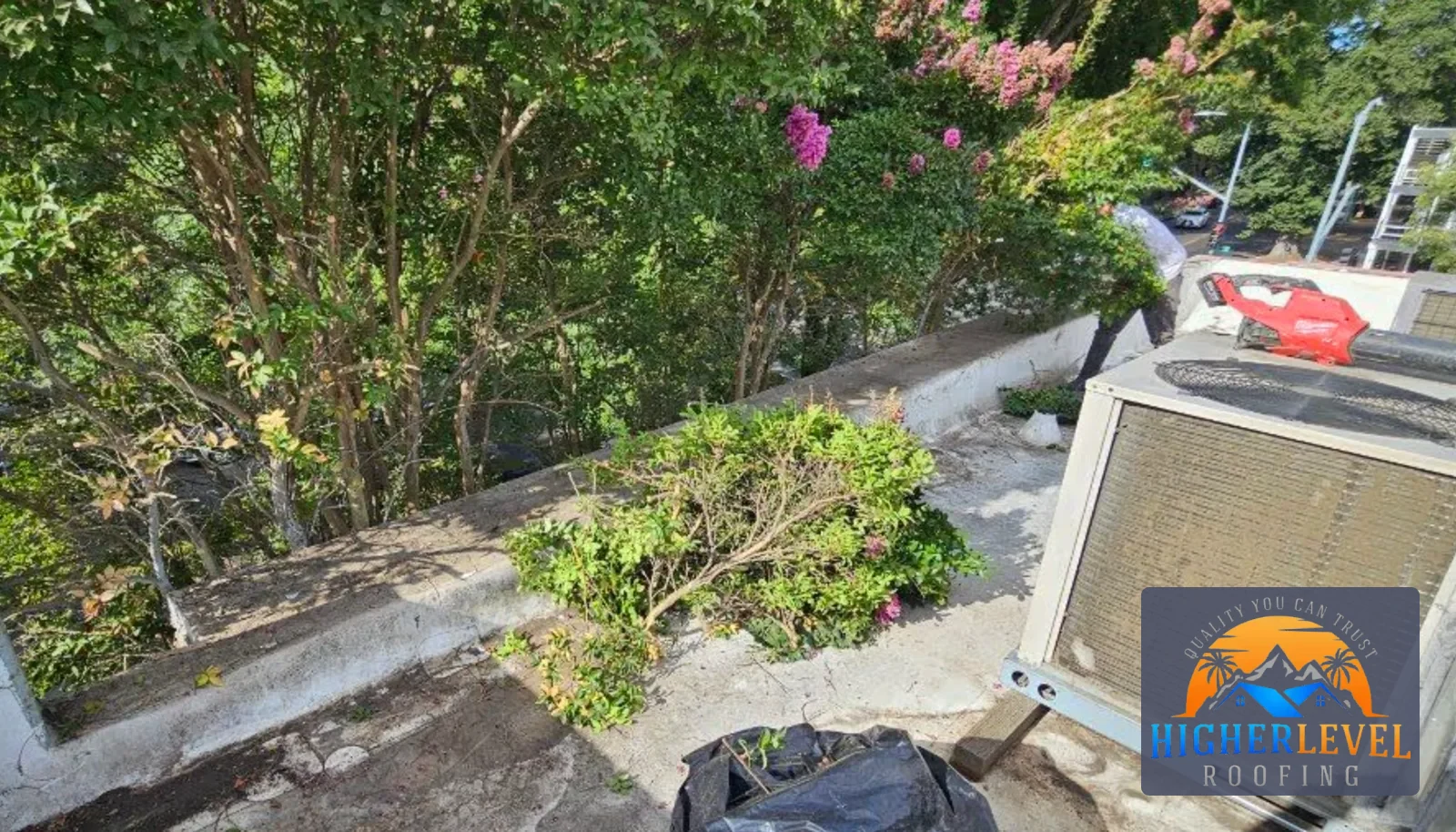
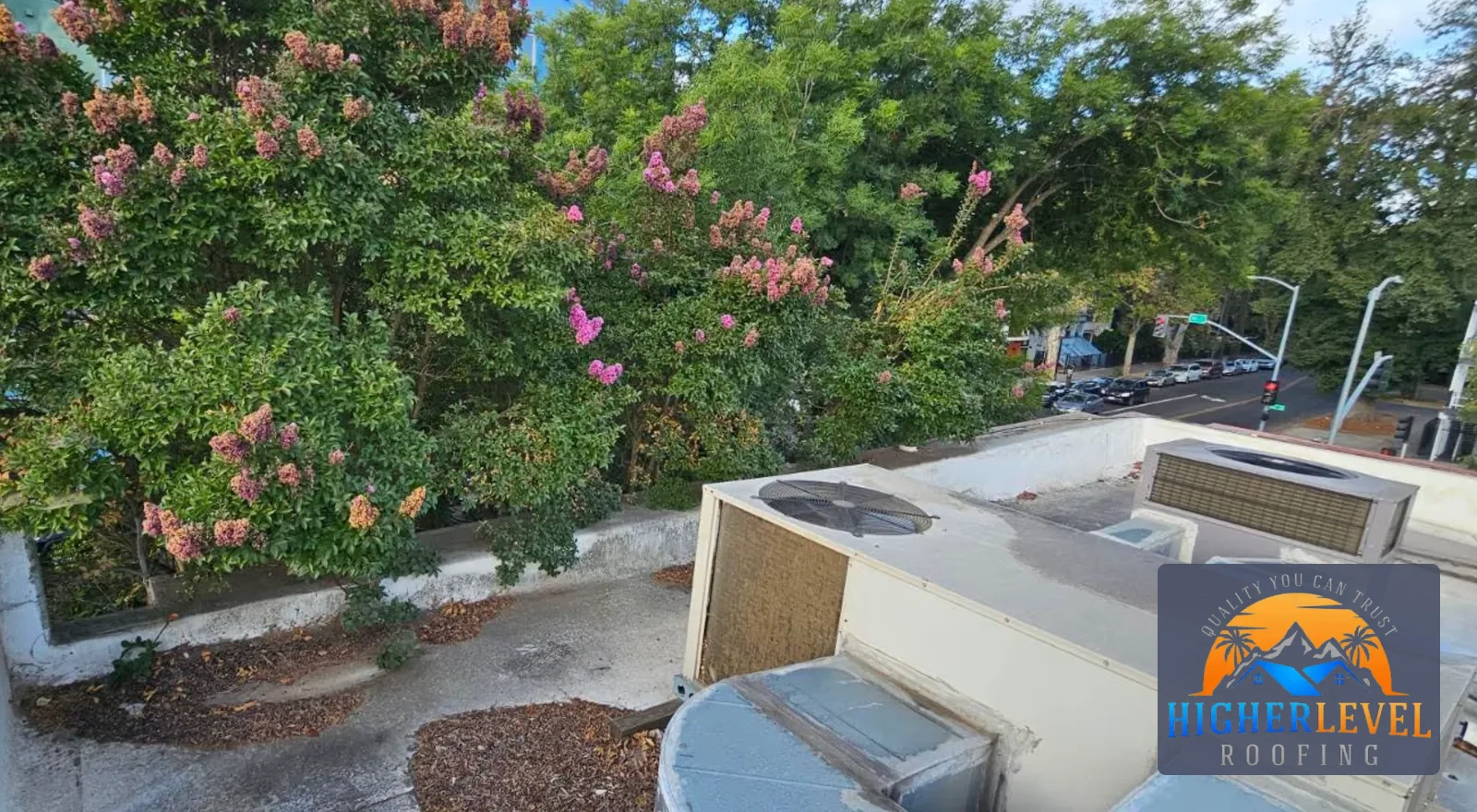
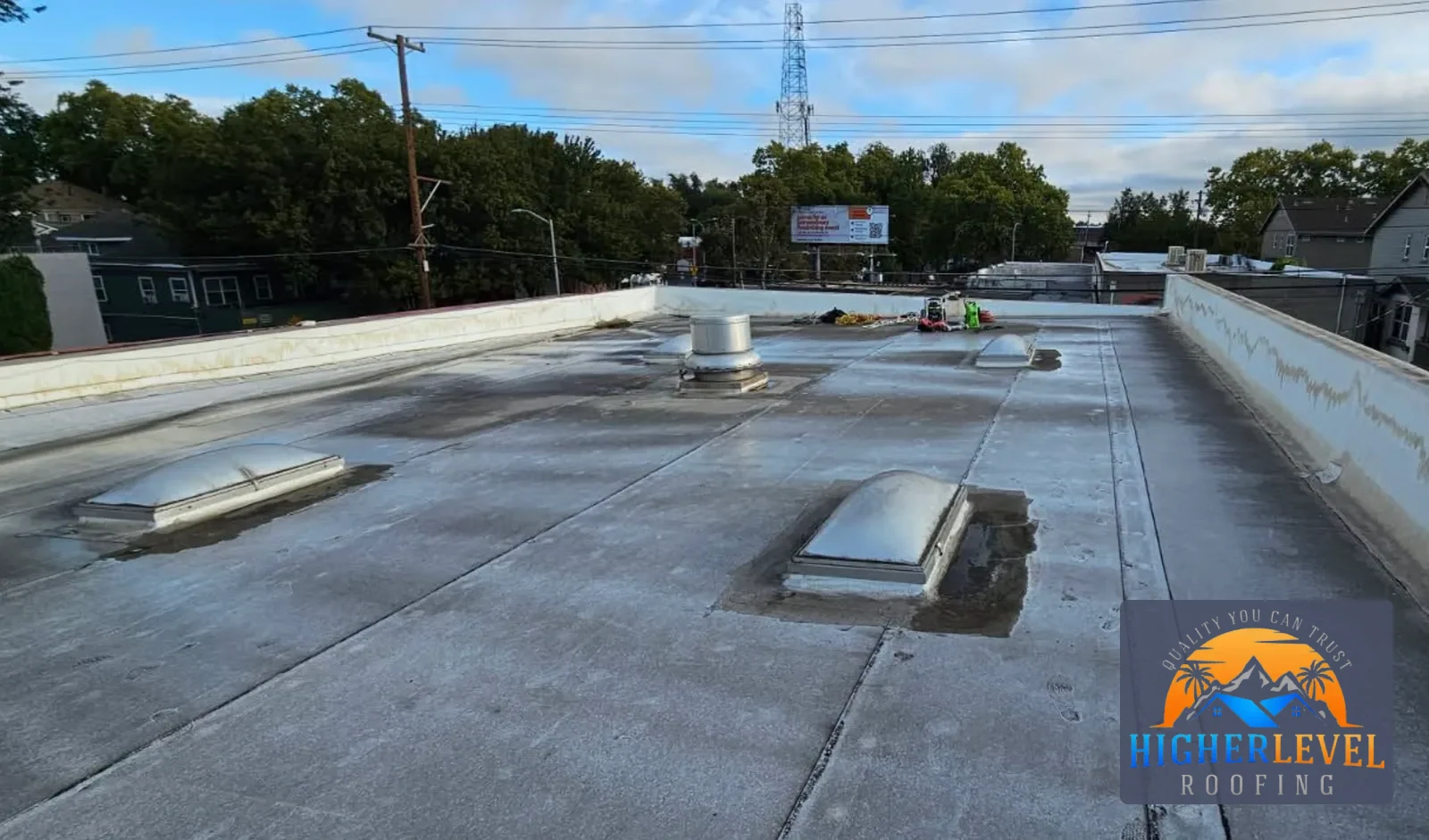
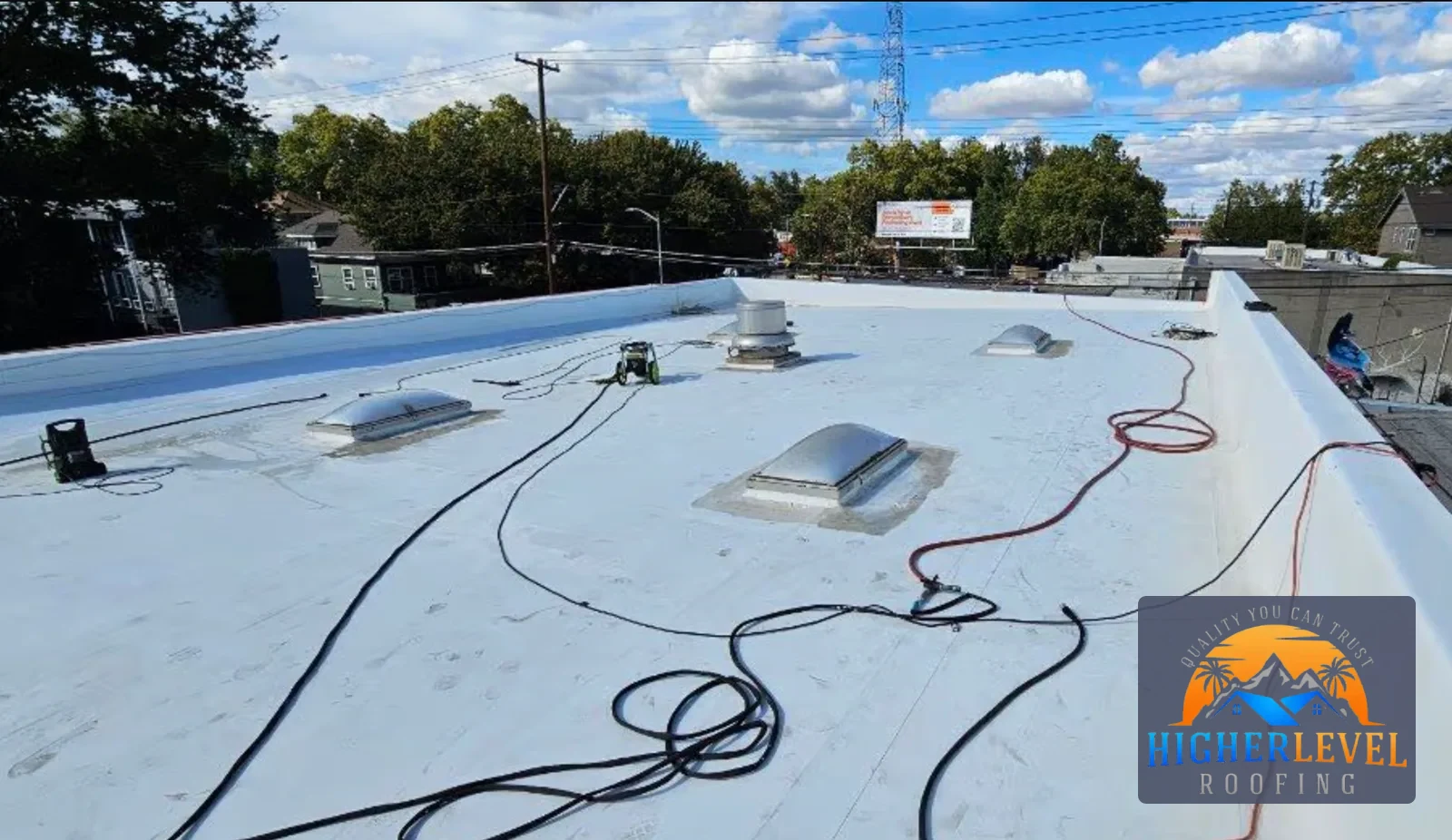
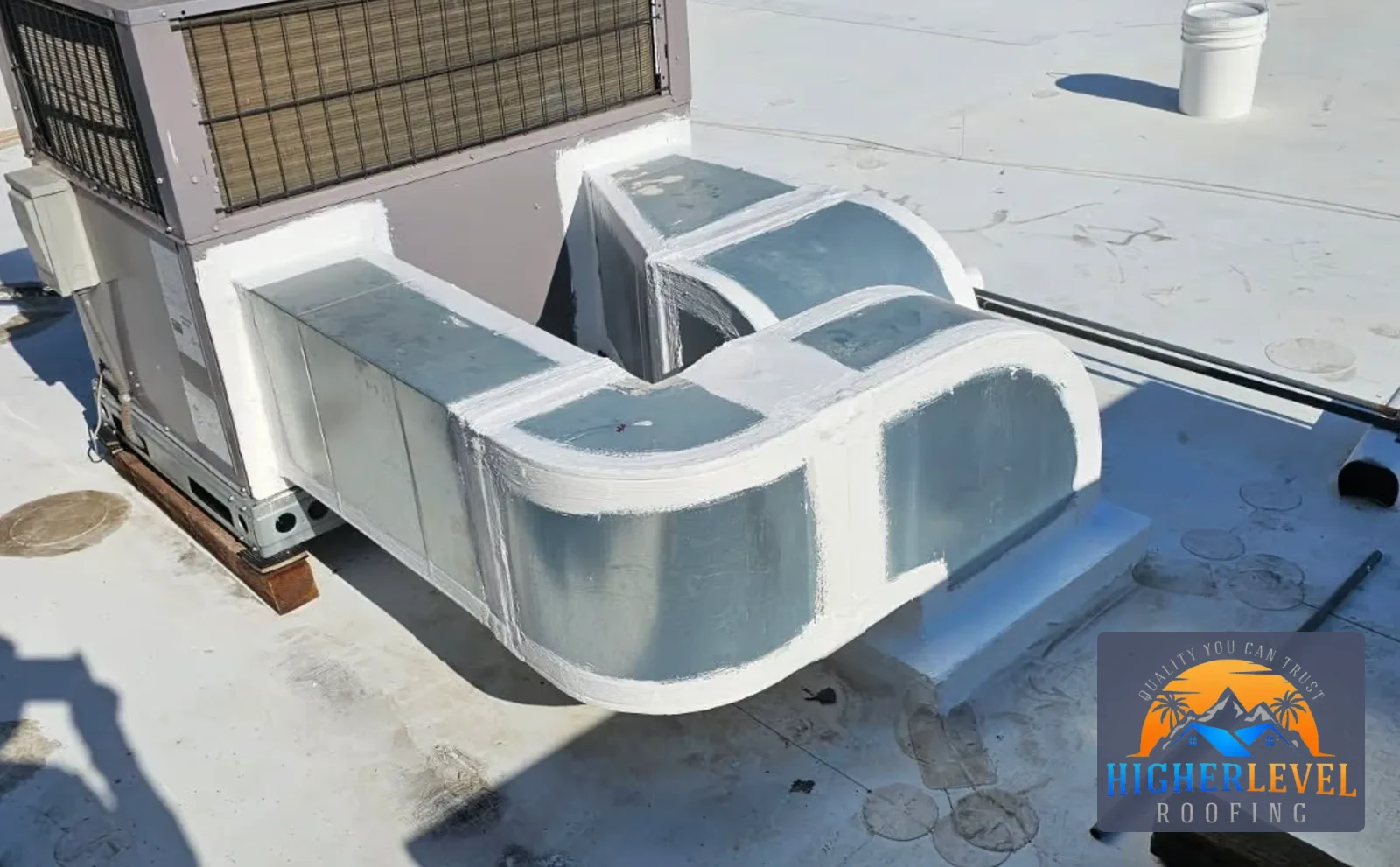
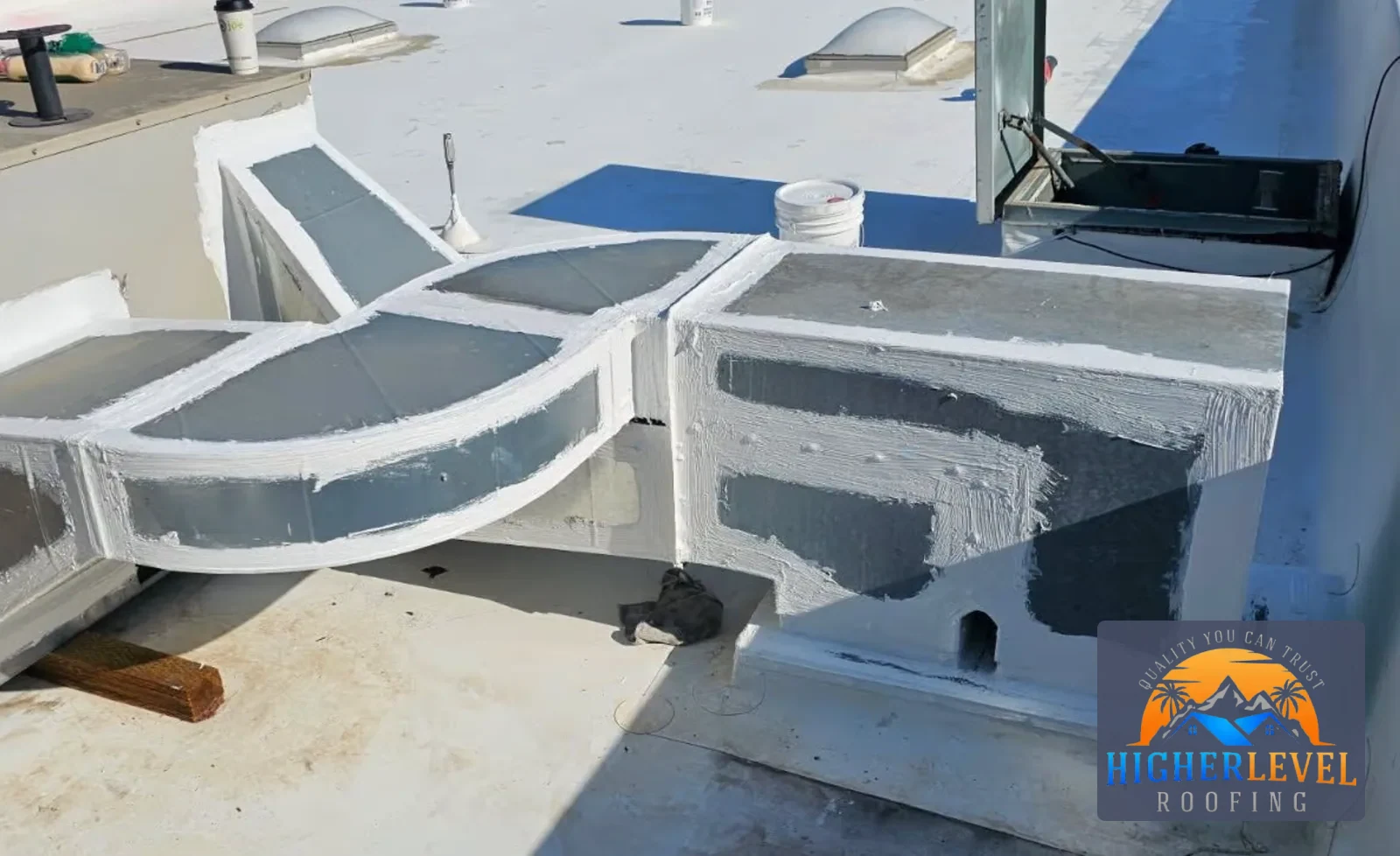
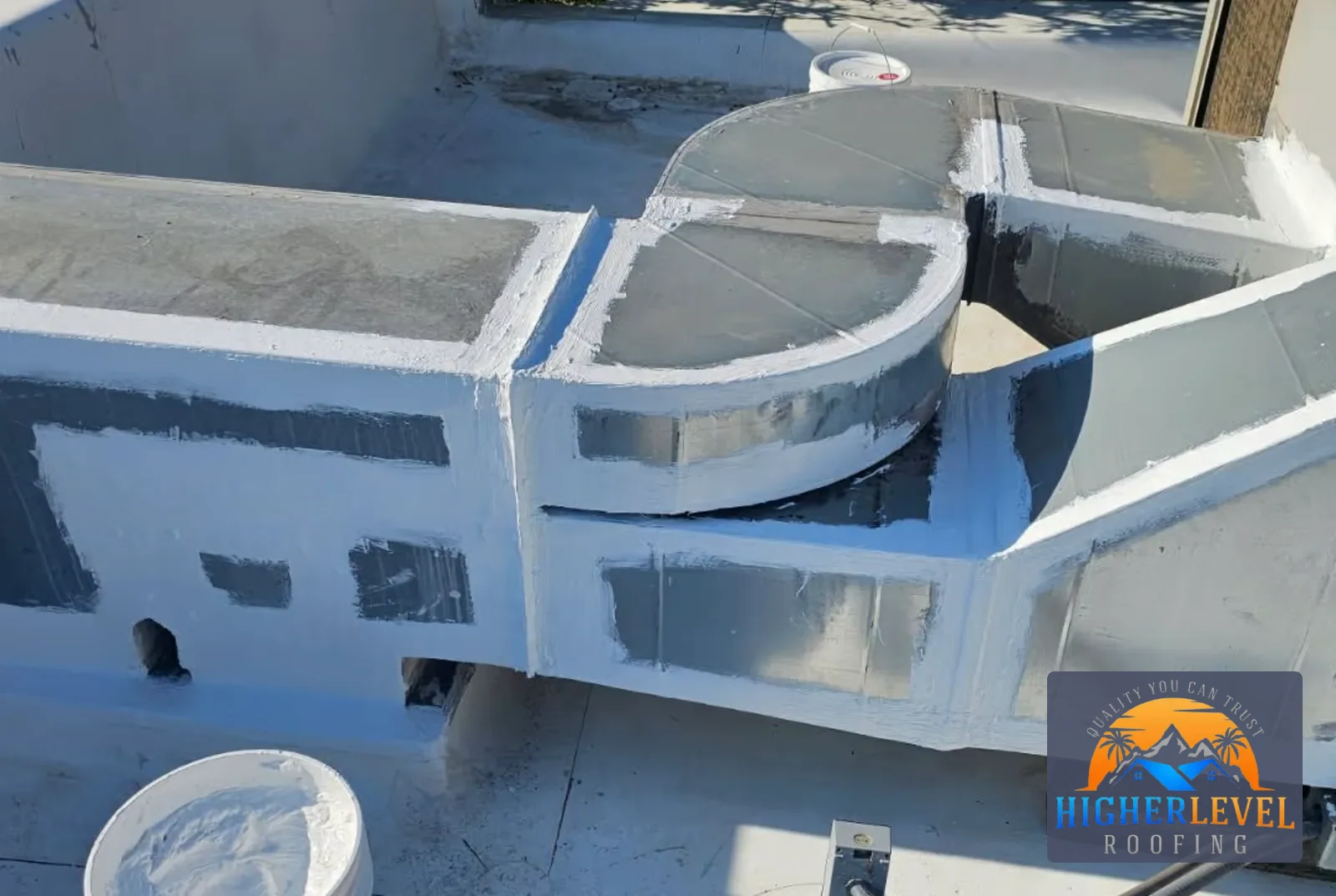
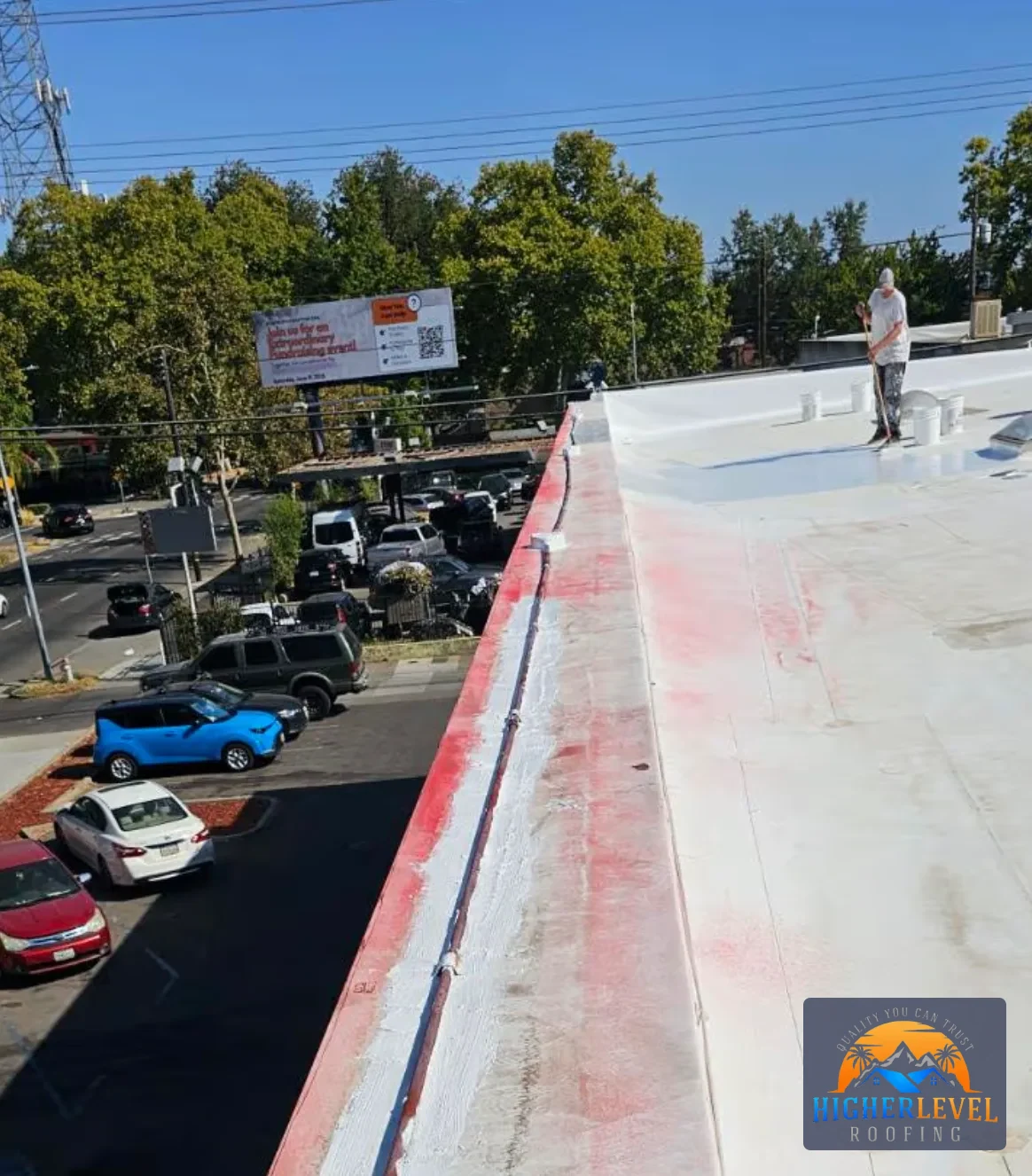
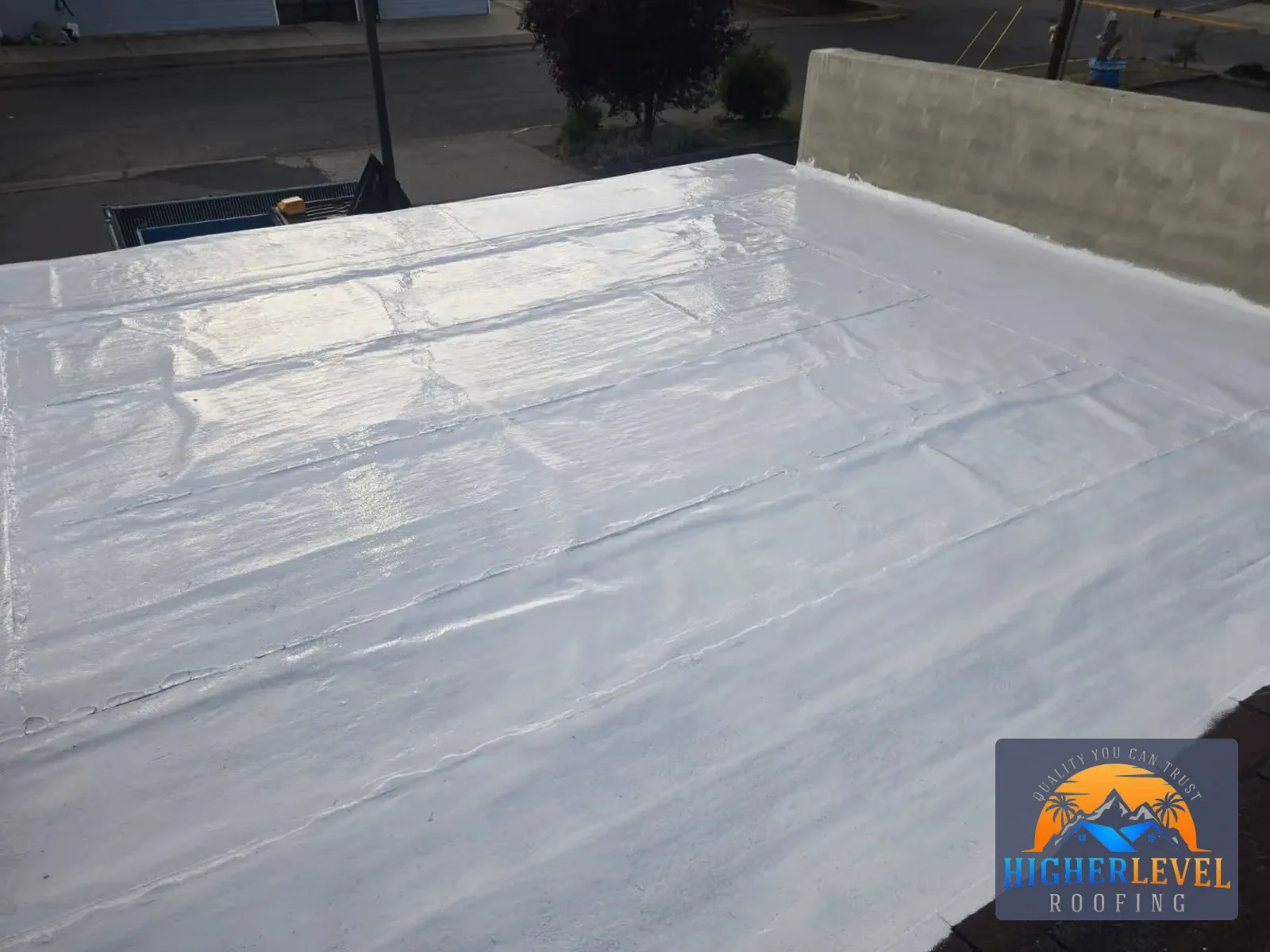
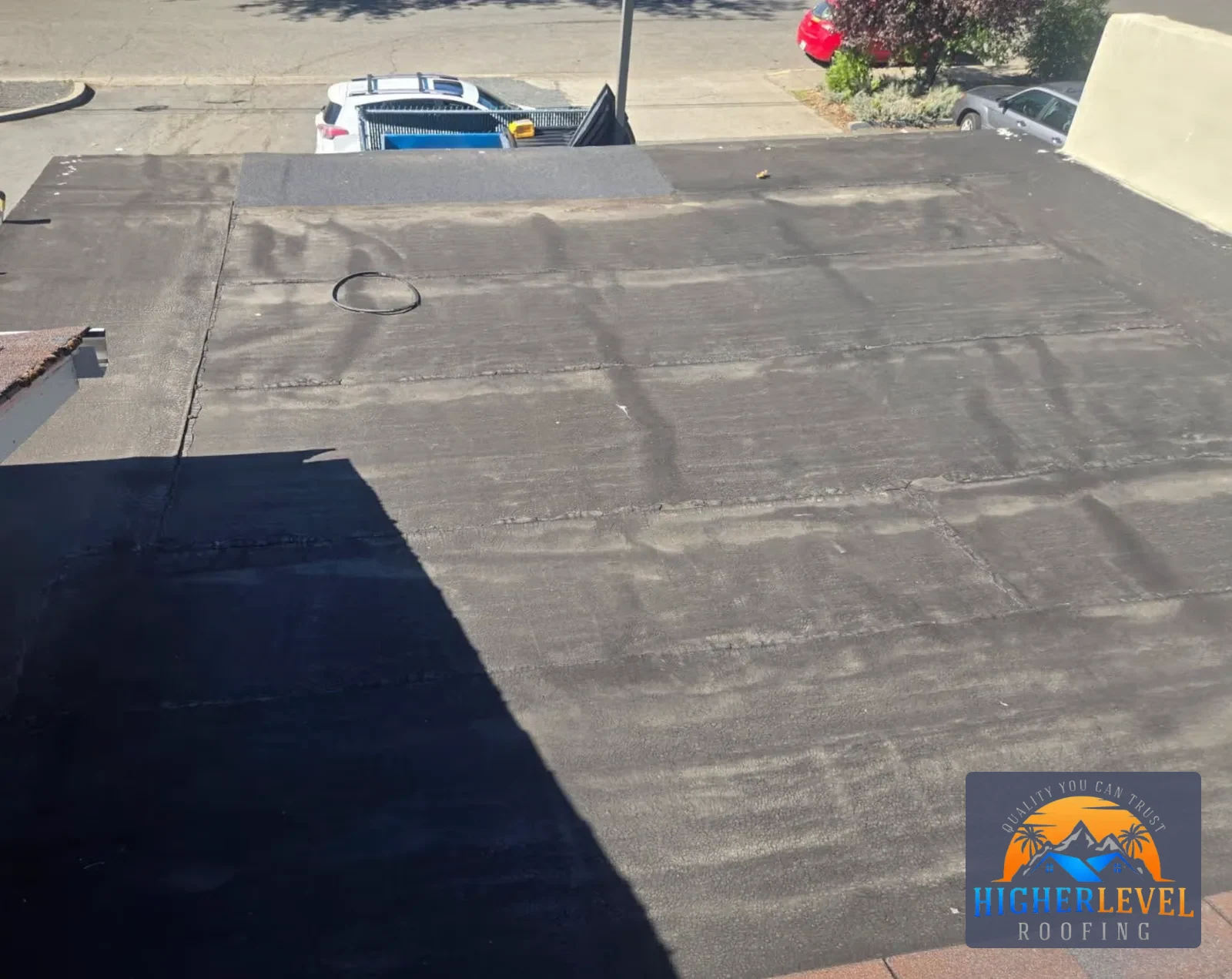
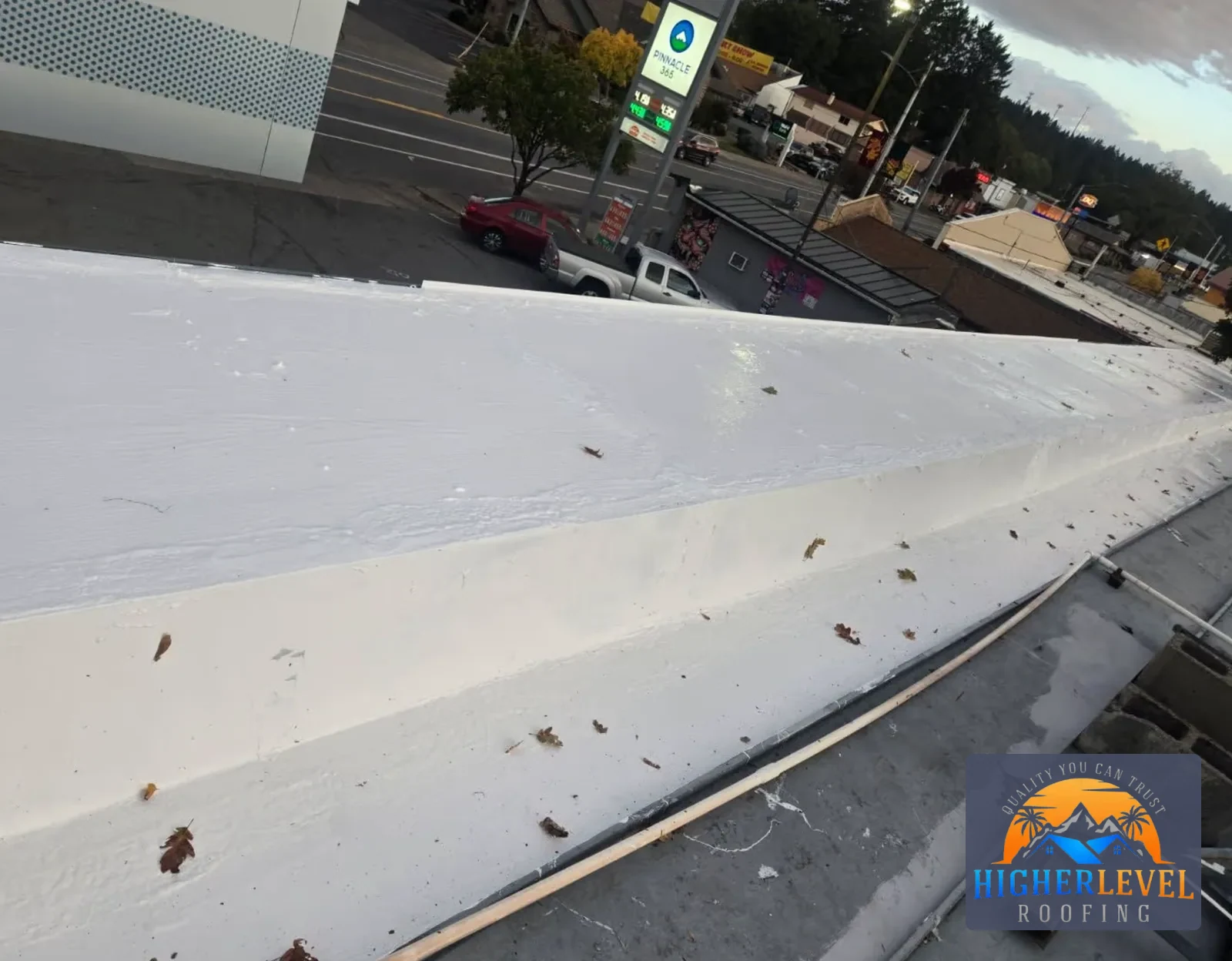
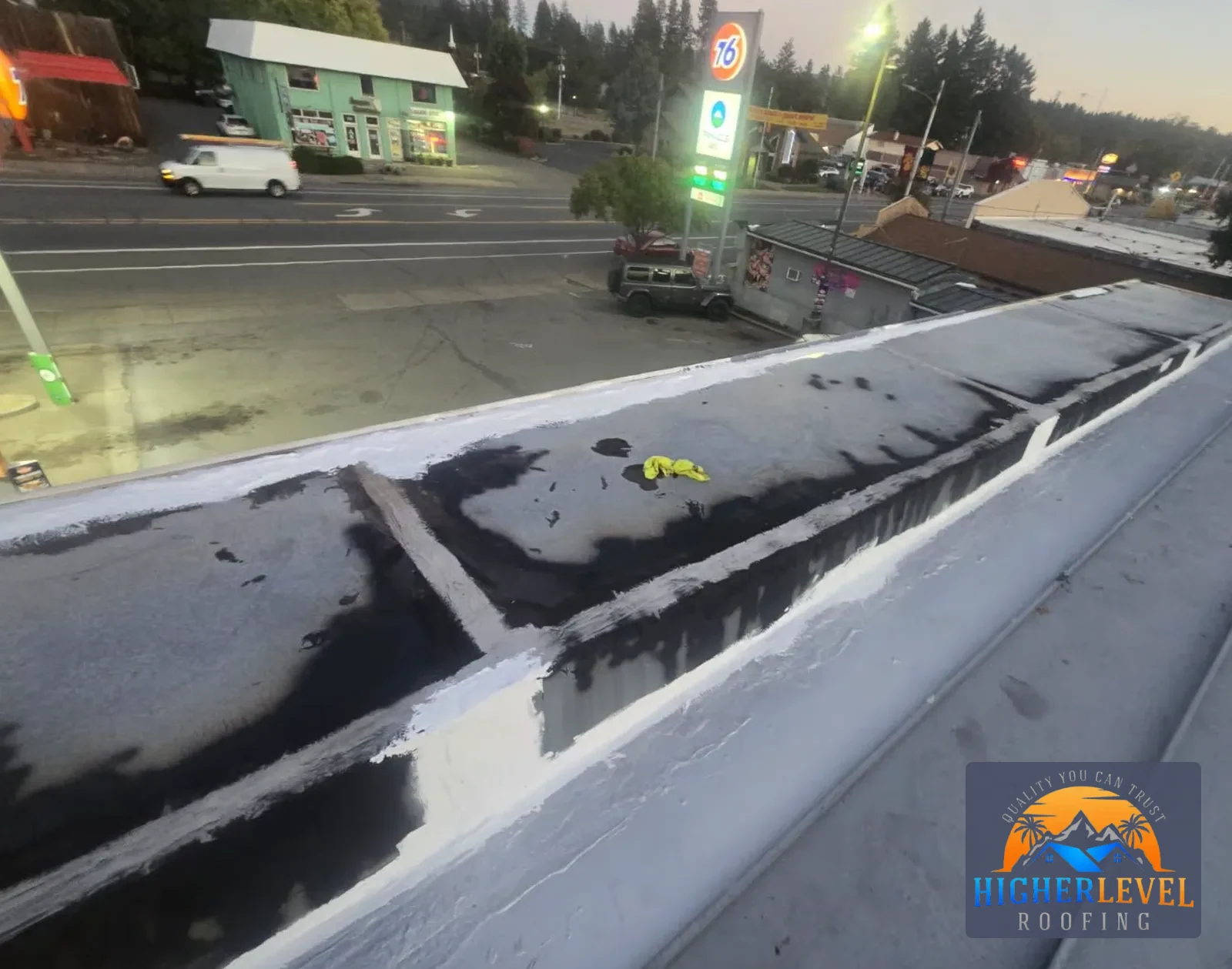
Roof coatings are used to protect an existing roof surface when the roof is still a good candidate for restoration. The coating has to be matched to the roof type, surface condition, and drainage pattern.
Coatings can help seal tiny pinholes, seams, and micro-cracks so water has fewer places to enter the roof.
Many coatings reflect UV exposure away from the roof. That can lower roof surface temperature and reduce cooling demand during hot weather.
A coating can protect the underlying roof from weather exposure, harsh sun, and daily wear when the existing roof is prepared correctly.
A good coating system can extend roof life when the deck, seams, flashings, and drainage areas are still in workable condition.
The installers we send out have spent years working on different roof decks and know how each coating behaves when the temperature shifts. They check the dew point before they start because moisture in the air can ruin the finish before it even sets. Every pass with the sprayer gets measured for thickness so the final mil rate meets the product specification. The crew applies each coat to the specified thickness and allows proper time between coats. Homeowners see the surface change as the coating goes on and starts to cure. We check the finished work from multiple angles before we consider the job complete.
These three coatings are common, but they do not perform the same way.
| Feature | Acrylic | Silicone | Polyurethane |
|---|---|---|---|
| Best Used For | Sloped roofs and budget projects | Flat roofs and wet climates | High foot-traffic areas |
| Standing Water Resistance | Poor | Excellent | Good |
| UV Reflectivity | Excellent | Excellent | Good |
| Durability | Moderate | High | Very high |
| Relative Material Cost | Low | High | High |
A coated roof still needs basic maintenance. A little attention helps the coating stay clean, reflective, and sealed at the vulnerable areas.
Branches, leaves, and dirt should be removed so moisture does not sit against the coating longer than needed.
Gutters, drains, and scuppers need to stay open. Even a strong silicone coating should not be forced to hold standing water forever.
A gentle yearly wash with a low-pressure hose and mild detergent can help maintain the coating’s UV reflectivity.
Skylights, vents, edges, and seams should be checked a couple of times a year for early peeling or flaking.
If a branch or tool gouges the coating, the damaged area should be patched with compatible mastic or caulk before water gets below the membrane.
Higher Level Roofing uses local crews who understand how weather patterns affect roofs in this part of the state. We see the same issues repeat across many homes because the sun beats down hard in summer and the moisture settles in during cooler months. When we schedule the work, we watch the forecast closely so the coating has the right conditions to cure properly. Our crew works in the same neighborhoods every week and already knows which roof types hold up and which ones need extra attention at the valleys or around penetrations. That familiarity makes small decisions easy.
Homeowners often start by searching for roof coating help and trying to find who can do the job correctly. Higher Level Roofing is a crew that finishes the work and leaves the property ready for normal use in the shortest practical amount of time. Equipment is minimal and the crew size right for the roof size so the disruption stays short. The products we review with the property owner need to stand up to the actual conditions on that particular slope and exposure. A roofing coating consultation and estimate is always free and completed on site. It starts with a thorough walk on the roof. We look for blisters and cracks at the seams. We also note areas where previous patches have started to lift. The written proposal lists the exact products we plan to use and shows the expected coverage rate. It includes the steps we take to protect the landscaping and gutters during the work. Owners receive the numbers before any material gets ordered so they can compare and decide on their own timeline. If the inspection shows active leak paths, the next step may involve targeted roof repairs before coating.
Yes. Higher Level Roofing provides roof coating inspections and applications in our service area. We start by checking the roof surface, water movement, seams, flashings, and areas where loose material could affect adhesion.
We inspect the roof before recommending a coating. A roof may be a good candidate when the deck is sound, drainage is workable, and damaged seams or flashings can be repaired first. If the roof has soaked insulation, major deck damage, or widespread failure, we will explain why coating may not be the right move.
A coating only performs as well as the surface underneath it. Higher Level Roofing cleans loose material, marks repair areas, addresses seams, and checks flashing details before the coating goes down. Poor prep can keep the coating from bonding correctly.
Yes. We look closely at seams, edges, vents, skylights, wall transitions, and flashing areas during the inspection. Those weak points need repair before coating because covering a bad detail does not fix the leak path.
It depends on the roof condition and how much water sits there. Silicone is often a better fit for flat roofs with ponding concerns, but we still check drainage first. A coating should not be used to hide a drainage problem that needs real correction.
A properly applied coating can add years to a roof that still has usable life left. The actual result depends on the existing roof material, prep work, coating type, roof slope, sun exposure, and how well the roof is maintained after application.
A coating can help protect the roof surface, but active leak points need to be found and repaired first. Higher Level Roofing checks likely leak areas before coating so the project is not just covering over damage.
Great owner and great business
Cody and the crew were awesome to work with! They showed up for an estimate within 24 hours and...
I hired them for a thorough inspection after the last roofing company I used caused a leak and...
Five stars for Higher Level Roofing! Cody and the team at Higher Level Roofing truly live up to...
The best roofing contractor in Sacramento! We have worked with a few roofing companies over the...
Great guys! We love Cody. We have used them a few times, and their work is great. They leave the...
Home Roofing Services
Request help with roof repairs, replacement, tile roofing, flat roofing, gutters, coatings, or a roof inspection. We will review the details and follow up with practical next steps.
Privacy choices
We and other third parties use cookies and other tracking technologies to help personalize content, to analyze and measure advertisements, to improve and protect our site, to provide chat, hosting and other services, and as further described in our Privacy Policy. By browsing our website, you consent to this use.