Roof leaks are common after heavy rain, wind-driven storms, and long stretches of wet weather in the Bay Area, Sacramento region, and nearby foothill communities. A leak does not always mean you need an entirely new roof, but it does mean water found a way past part of your roofing system. The goal is to limit the indoor damage, document what happened, and have the source inspected.
What to Do When Your Roof Starts Leaking
Start by protecting the room below the leak. Move furniture, electronics, rugs, family photos, and anything else that does not belong in the splash zone. Place a bucket or waterproof container under the drip, then use old towels to catch water that is spreading across the floor.
If the ceiling is bulging, water may be collecting above the drywall. Keep children and pets away from the area because wet drywall can weaken and fall. Do not stand directly underneath a sagging ceiling, even if you are trying to save the good bucket from the garage.
Water and electricity are a bad combination. If water is close to a ceiling light, outlet, fan, or electrical panel, avoid touching the fixture or standing in the wet area. Turn off power only when you can reach the breaker safely; otherwise, contact an electrician or emergency professional for help.
- Contain the water, move valuables, and photograph the affected rooms.
- Call a roofing professional and begin drying wet materials as soon as possible.
- Stay off the roof while it is wet, windy, dark, or still raining.
The Environmental Protection Agency recommends drying wet materials within about 24 to 48 hours when possible because quick drying can help prevent mold growth. Fans and dehumidifiers may help when they can be used safely, but they do not replace fixing the opening that allowed the water inside. Drying the ceiling while ignoring the roof is basically hitting snooze on the same problem.
Why Does My Roof Leak Only When It Rains?
A roof leak may stay hidden during dry weather because there is no flowing water to reveal the weak spot. Once rain begins, water moves over shingles, tiles, flashing, roof valleys, vents, and drainage areas. A cracked, loose, blocked, or poorly sealed section can then allow moisture into the roofing layers below.
The amount and direction of rain also matter. A roof may survive a light Sacramento shower but leak during strong wind-driven rain because the wind pushes water underneath roofing edges or around flashing. This is one reason a leak might appear during one storm but stay quiet during the next.
Northern California storms can also arrive in groups, leaving roofing materials and drainage systems wet for several days. Atmospheric rivers can carry large amounts of moisture toward the West Coast, contributing to periods of heavy rain. When gutters are full, drains are blocked, or a roof already has a weak area, that extended rainfall may finally expose the problem.
Common Causes of a Roof Leak After Rain
The visible drip inside your home is not the whole story. Water can enter through one section of the roof, travel along wood framing or underlayment, and appear several feet away. That means the stain over your couch may not be directly below the damaged shingle.
Some of the most common sources include:
- Missing, lifted, cracked, or worn composition shingles
- Broken roof tiles or aging underlayment beneath the tiles
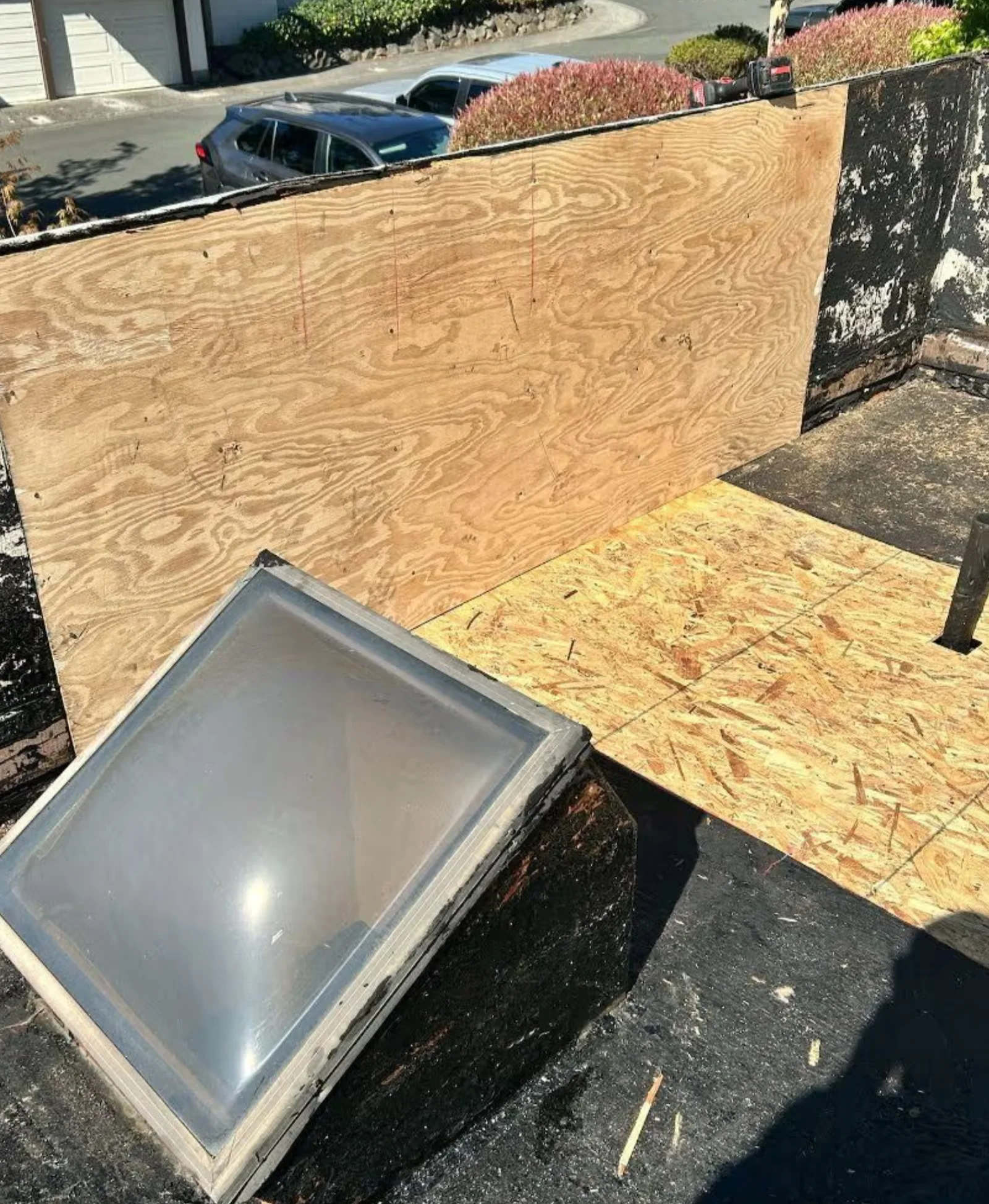
- Loose or damaged flashing around chimneys, skylights, vents, and walls
- Clogged gutters, roof drains, scuppers, or downspouts
- Open seams or ponding water on flat and low-slope roofs
- Old sealant around roof penetrations
- Damage around solar mounts, satellite equipment, or HVAC components
- Rotten roof decking caused by a leak that has been active for some time
Roof valleys are another common trouble spot because they carry a large amount of rainwater. Leaves, pine needles, and other debris can slow drainage and hold moisture against the roofing material. This is especially relevant for homes near mature trees in communities throughout Sacramento, El Dorado County, Placer County, and the Bay Area.
Why Is Water Dripping After the Rain Has Stopped?
A roof can continue leaking for hours after the sky clears. Water may be trapped inside insulation, between roofing layers, or on top of the ceiling drywall. It can then follow framing and slowly drip into the room long after the storm has moved on.
This delay can make homeowners think the leak has stopped or that the water came from a plumbing pipe. A roofing inspection can help separate a roof problem from plumbing, condensation, or an HVAC drain issue. The timing, location, weather conditions, and moisture pattern all provide useful clues.
Do not assume the problem fixed itself because the dripping stopped. The rain stopped supplying water, but the opening may still be there waiting for the next storm. Roof leaks are not known for personal growth or learning from their mistakes.
Can I Find the Roof Leak From Inside the Attic?
If your attic is safely accessible, you may be able to look for wet insulation, dark wood, water trails, or daylight coming through an opening. Use a flashlight and remain on secure attic flooring or framing. Do not step between ceiling joists because drywall will not support your weight.
Take photos of anything that looks wet or damaged, but avoid pulling apart electrical wiring or disturbing areas with visible mold. The highest wet point may help identify the general entry area. Still, water can travel sideways, so an attic stain is a clue rather than a final diagnosis.
Checking the attic does not require climbing onto the roof. Wet roofing materials can be extremely slippery, and rain may hide soft decking or loose materials. Save the rooftop detective work for someone with the proper safety equipment and experience.
Should I Put a Tarp on My Roof?
A properly installed tarp can sometimes provide temporary protection until a repair is completed. The important words are properly installed. A loose tarp can trap water, tear roofing materials, blow away, or become a rather dramatic neighborhood kite.
Installing a tarp usually requires roof access, secure fastening, and an understanding of how water needs to flow. Avoid climbing up during rain, strong wind, or darkness. Contact a roofing company when the roof is steep, high, damaged, or unsafe to access.
A tarp is not a permanent roof repair. It may reduce additional water entry, but the damaged flashing, shingles, tiles, membrane, or decking will still need to be evaluated. Temporary protection should lead to a real repair plan, not become a long-term exterior decorating choice.
Does a Roof Leak Mean I Need a New Roof?
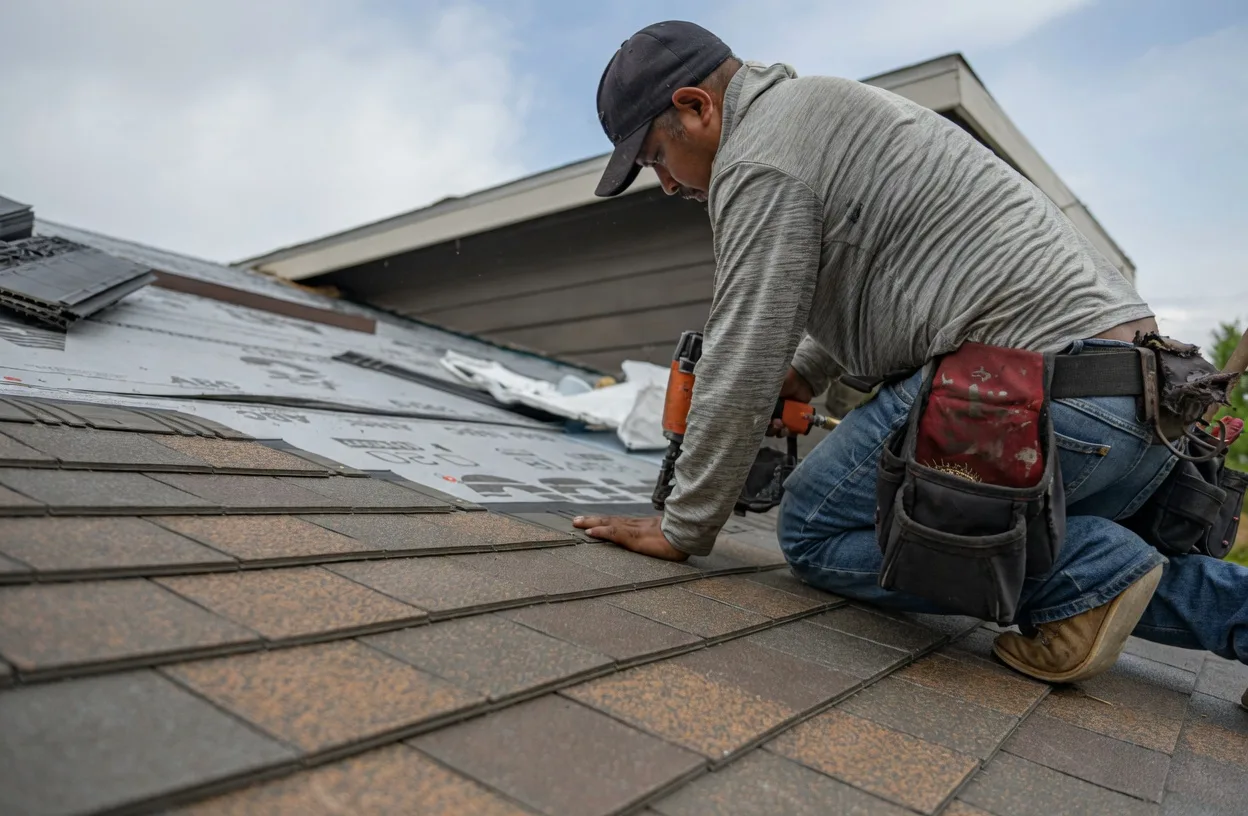
Not always. A newer roof with one damaged vent flashing or a small section of missing shingles may only need a focused repair. The roofer should examine the condition of the surrounding material, the age of the roof, the number of leak areas, and whether moisture damaged the roof deck.
Replacement may make more sense when the roofing material is near the end of its useful life, leaks are appearing in several areas, or previous patchwork is starting to look like a quilt nobody asked for. Extensive underlayment failure beneath a tile roof can also require more than replacing one or two visible tiles. Flat roofs may need broader work when seams, drainage, and the surface membrane are failing across a large area.
A good inspection should explain what failed and show you the affected areas. It should also separate urgent work from recommended maintenance so you understand what needs attention now and what can be planned for later. You should not have to approve a mystery repair based on a blurry photo and a shrug.
What Will a Professional Roof Leak Inspection Include?
A roofing professional normally starts by asking where and when you noticed the leak. Photos taken during the storm can be helpful because water stains may look different after they dry. Let the inspector know whether the leak happens during every rain or only during heavy wind.
The inspection may include the roof surface, valleys, flashing, pipe penetrations, vents, skylights, gutters, drainage points, and visible roof edges. When accessible, the attic or interior leak area may also be checked. The objective is to trace the likely water path rather than placing sealant around the first suspicious-looking object.
Higher Level Roofing provides roof leak and storm damage services for homeowners and property owners in the Sacramento area, nearby foothill communities, and select Northern California markets. You can learn more about roof repair services or request a roof inspection through the company website.
How to Reduce the Chance of Another Rain Leak
Roof maintenance works best before the forecast fills up with rain clouds. Keep gutters and downspouts clear, especially after leaves and pine needles begin dropping. Check the ground after a storm to confirm that downspouts are moving water away instead of creating a private pond next to the foundation.
Look from the ground for missing shingles, slipped tiles, damaged roof edges, overflowing gutters, or debris piled in valleys. You may also notice cracked sealant, loose flashing, or staining below the roofline. Binoculars and a camera zoom are safer than leaning a ladder against a wet gutter.
Schedule periodic inspections based on the roof's age, material, surrounding trees, and previous leak history. An inspection before the rainy season may catch small problems while they are still manageable. A little maintenance now is usually less disruptive than rearranging the living room around a collection of buckets later.
Get Help With a Roof Leaking After Rain
A roof leak can be frustrating, but a clear response makes the situation easier to manage. Protect the room, avoid electrical hazards, document the damage, begin drying wet materials, and arrange an inspection. Do not wait for the next storm to confirm what the first storm already told you.
Higher Level Roofing helps Northern California property owners identify roof leak sources and review practical repair options. The team works with composition shingles, tile roofs, metal roofing, flat roofing, gutters, and other common roofing systems found around Sacramento, the foothills, and Northern California. Contact the company to confirm service availability for your Bay Area or Sacramento-area property.
To schedule an inspection, visit the Higher Level Roofing contact page. Sharing photos, the location of the interior stain, and the date of the storm can help the team understand what is happening before the visit. Your roof has one job, and bringing the weather indoors is not it.
Frequently Asked Questions About Roof Leaks After Rain
Is a roof leak after rain an emergency?
It may be an emergency when water is near electrical fixtures, the ceiling is sagging, a large amount of water is entering, or part of the roof appears structurally damaged. Keep people away from the area and contact the appropriate emergency professional. Smaller leaks still need prompt attention because repeated moisture can damage insulation, drywall, wood, and belongings.
Can a roof leak stop on its own?
The dripping may stop when the rain ends, but the opening that allowed water inside usually remains. Roofing materials can shift slightly with temperature and wind, so the leak may not appear during every storm. An inspection is the best way to determine whether a repair is needed.
How quickly should I call a roofer after finding a leak?
Contact a roofer as soon as it is safe to do so. Active leaks and visible ceiling damage should receive priority, especially when more rain is forecast. Early inspection may help limit the amount of wet insulation, damaged drywall, and rotten wood that must be removed.
Will homeowners insurance cover a leaking roof?
Coverage depends on the cause of the leak and the terms of your policy. Sudden storm damage may be treated differently from damage caused by long-term wear or neglected maintenance. Photograph the damage, keep repair records, and contact your insurance provider for an explanation of your specific coverage.